
Automated Dimensional Inspection: Key Processes And Techniques Explained

Types of Automated Dimensional Inspection Systems
Automated dimensional inspection systems are categorized primarily by their measurement principles and sensor technologies. Laser scanning systems, coordinate measuring machines (CMM), and vision-based systems represent common types employed across industries. Laser scanners typically work by projecting laser lines or points onto surfaces, creating comprehensive point clouds that represent the object’s shape. This is valuable for complex geometries but might require post-processing to extract specific dimensions.
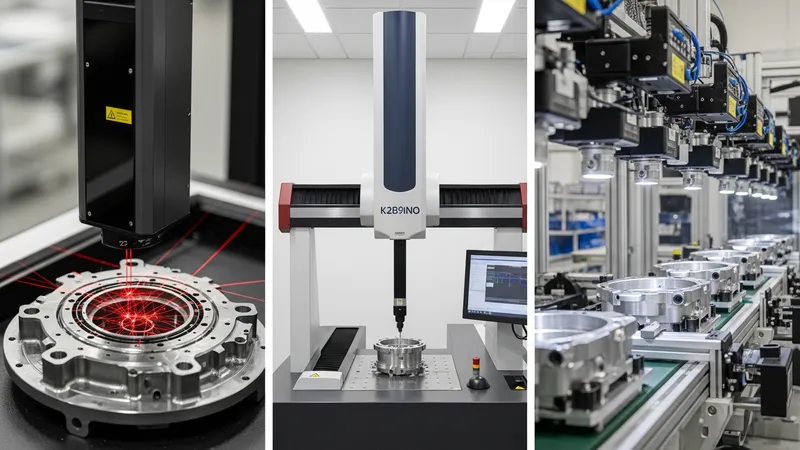
Coordinate measuring machines operate with tactile or scanning probes that physically contact components at selected points to gather coordinate data. These systems are often found in quality laboratories or production environments where precision is a priority. Vision-based systems employ optical cameras and lighting to capture images analyzed via algorithms that recognize features and edges, suited for inline inspection with less physical interaction.
Hybrid systems are also possible, combining elements of laser scanning with vision or tactile measurements to improve accuracy or adapt to various component types. Each system’s suitability depends on factors like surface finish, material, dimensional complexity, and production volume. Typically, manufacturers balance inspection thoroughness with operational efficiency, choosing systems aligned with their production demands.
In terms of implementation, system selection may also factor in cost considerations, including hardware investment and maintenance. Laser scanning equipment and CMMs commonly represent higher capital expenses and may require skilled operators. Vision systems might be more cost-effective for high-volume, simpler dimension checks but could lack some precision achievable by tactile methods. Understanding these attributes can help in framing inspection approaches within manufacturing quality strategies.