
Artificial Intelligence In Breast Cancer: Applications In Diagnostic Processes

Data Quality and Algorithm Training in AI for Breast Cancer
High-quality data is foundational to the success of AI applications in breast cancer diagnostics. Models are typically trained on large, annotated image datasets, with each image labeled according to expert findings. This allows the AI system to learn the visual features that may indicate various tissue patterns. The inclusion of diverse demographic backgrounds and imaging equipment settings further enhances generalizability, ensuring the algorithms remain applicable in a range of clinical environments.
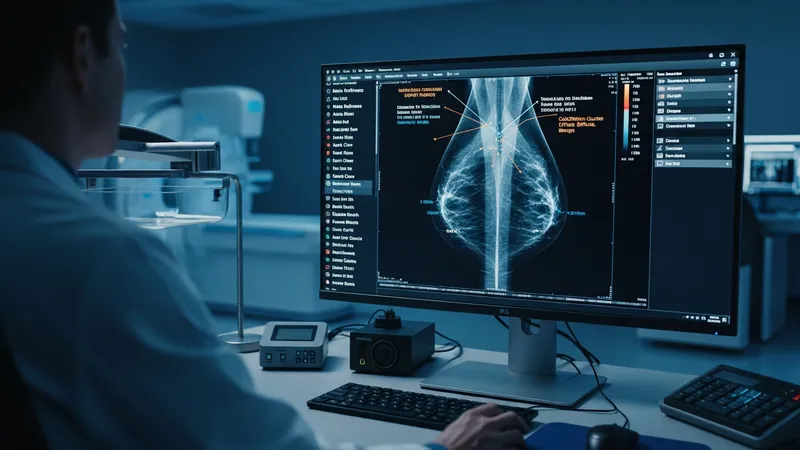
When developing AI for breast cancer analysis, data sources often comprise digitized mammograms from screening programs or hospital archives. Rigorous anonymization protocols are applied to protect patient confidentiality. Institutions may use frameworks such as the Digital Imaging and Communications in Medicine (DICOM) standard to facilitate consistent image formatting, making it easier to integrate data from multiple sites for training purposes.
AI developers may employ methods like cross-validation and iterative retraining to test and refine their models before deployment. Validation datasets, separated from the initial training set, allow for an objective assessment of how the model performs on unseen cases. Studies have found that such approaches may reduce overfitting and improve reliability when models are eventually applied in clinical settings.
Data imbalance is a commonly discussed challenge in this area. For example, rare presentations might be underrepresented in available datasets, potentially influencing model output. Strategies for addressing these gaps include data augmentation, where modifications to existing images create synthetic variations, and targeted collection efforts focused on acquiring more examples of uncommon scenarios.