
Artificial Intelligence In Breast Cancer: Applications In Diagnostic Processes

Artificial intelligence (AI) encompasses a range of computational technologies that allow machines to process information, recognize patterns, and provide analytical support across sectors. Within the context of breast cancer, AI is most frequently applied to the analysis of complex imaging data and scientific literature. These systems rely on training algorithms to identify features in medical images and datasets that may otherwise be difficult for humans to interpret due to scale or complexity. The practical use of AI in this field centers around aiding healthcare professionals in managing extensive information, optimizing their workflows, and providing secondary analysis.
AI’s integration into breast cancer diagnostics often involves the use of software that can assess mammograms, ultrasound images, or MRI scans for notable characteristics. Deep learning algorithms, particularly convolutional neural networks, can be tailored to detect differences in tissue structure or density. In parallel, natural language processing is sometimes deployed to extract or synthesize key findings from research publications and medical records, supporting evidence-based practices. These approaches are developed as assistive tools, intended to enhance established diagnostic procedures under regulated oversight.
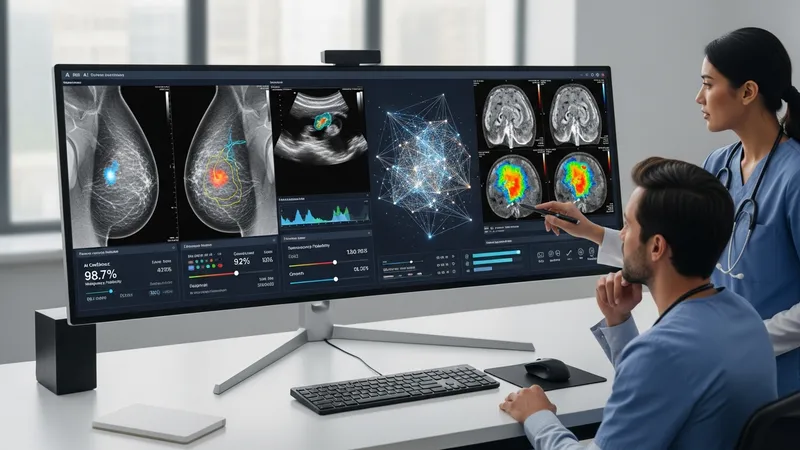
- Watson Health Imaging: Uses machine learning to assist in reviewing breast imaging scans for patterns that may require physician review.
- Hologic Genius AI: Applies deep learning to mammography to highlight areas of interest for radiologists.
- Kheiron Medical Technologies: Offers image analysis software designed for mammography screening environments.
The development of AI in breast cancer applications is influenced by access to high-quality, annotated datasets. These datasets allow machine learning models to learn from a variety of cases, which typically improves the system’s ability to recognize relevant image features. Research initiatives often partner with hospitals or medical research institutions to obtain diverse samples, ensuring the models are exposed to a realistic range of imaging scenarios encountered in clinical practice.
AI tools in breast cancer are frequently assessed for their performance by comparing their analytical outputs to those of expert radiologists. These comparative studies may use metrics such as sensitivity and specificity to evaluate how well the AI identifies image characteristics in relation to established standards. This process is conducted under controlled conditions, typically as part of validation studies or pilot programs within healthcare networks, rather than as standalone diagnostic systems.
Emerging applications of AI extend beyond imaging to data management and workflow optimization. For example, some platforms are designed to automatically sort and organize imaging records, summarize case histories, or flag abnormalities for follow-up investigation. While the primary focus remains on assisting clinical professionals, there is also research interest in improving efficiency and reducing administrative burdens through automation of repetitive tasks.
The potential of AI in breast cancer diagnostics is closely monitored by regulatory bodies and professional associations. New tools may be subject to ongoing evaluation to ensure accuracy, data privacy, and integration with existing practices. As the landscape continues to evolve, understanding the application areas and collaborative development frameworks can provide valuable context. The next sections examine practical components and considerations in more detail.