
App Development: Lifecycle, Methodologies, And Common Tools

Testing and Quality Assurance in App Development: Lifecycle, Methodologies, and Common Tools
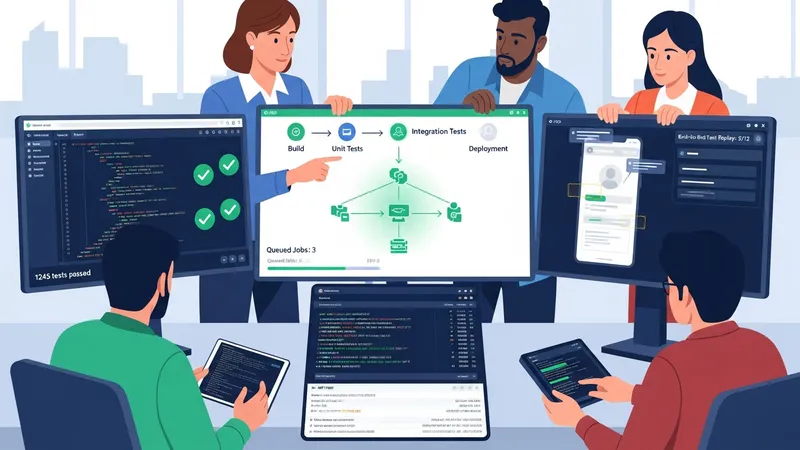
Testing and quality assurance span multiple activities that validate functionality, performance, and reliability. Methodologies influence when these activities occur: iterative development often integrates automated test suites into CI so tests run on each change, while some sequential approaches may emphasize larger test phases after development completion. Test types typically include unit tests for small code units, integration tests for component interactions, and end-to-end tests that simulate user flows. Teams commonly balance automated and manual testing based on the stability and complexity of features.
Test automation frameworks and tooling can vary by platform and language. Unit testing frameworks, UI automation tools, and API testing tools may be combined within CI pipelines to provide layered coverage. Performance testing tools may be introduced where load characteristics are important, and observability tools may capture runtime metrics during staging or canary deployments. Choosing suites that integrate smoothly with CI/CD systems often reduces overhead in test execution and reporting, which may lead to faster feedback on code quality.
Test data management and environment provisioning are practical considerations that affect test reliability. Creating reproducible test environments using containerization or infrastructure-as-code can reduce environmental flakiness and support parallel test runs. Managing realistic test data while respecting privacy rules may require anonymization techniques or synthetic data generation. Teams may also use feature toggles and staged rollouts to limit user exposure to changes while validating behavior under real-world conditions.
Quality metrics such as test coverage, defect rates, and mean time to recovery (MTTR) can provide insights but should be interpreted cautiously. Metrics may indicate trends that prompt investigation rather than serve as absolute success criteria. Cross-functional involvement in testing, including developers, QA engineers, and product stakeholders, often helps identify gaps in coverage and align expectations about acceptable risk. Regular retrospectives can surface process improvements that affect testing effectiveness over time.