
App Development: Lifecycle, Methodologies, And Common Tools

Development and Implementation in App Development: Lifecycle, Methodologies, and Common Tools
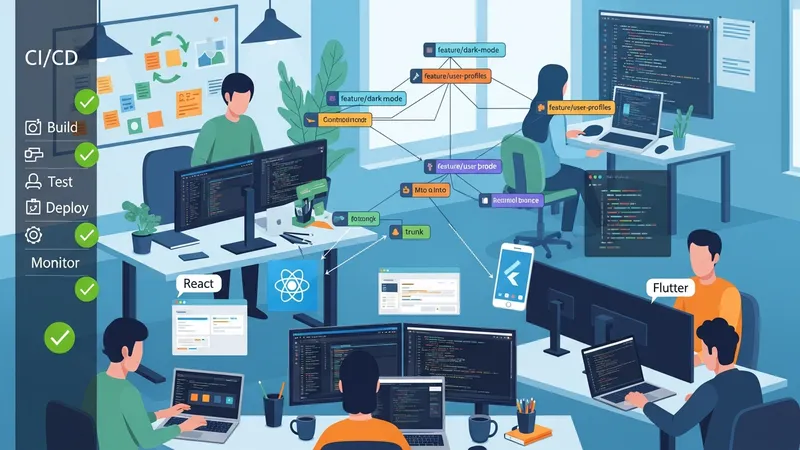
Development and implementation are the stages where code is produced and integrated. Methodologies affect how work is organized: in iterative cycles, small increments of functionality are implemented and integrated frequently, which may encourage short feedback loops. Teams commonly employ version control systems like Git to manage source code and branching strategies; branching models can range from trunk-based practices to feature-branch workflows, each with different implications for integration frequency and merge complexity.
Programming languages and frameworks are selected based on platform targets, performance needs, and team expertise. For web applications, frameworks such as React or Angular may be used to structure UI, while mobile development may use native SDKs or cross-platform toolkits like Flutter that allow a single codebase for multiple platforms. Frameworks often come with ecosystem tools for testing, state management, and build processes; teams typically evaluate trade-offs around runtime performance, developer velocity, and long-term maintainability when selecting a stack.
Code quality practices commonly include code reviews, static analysis, and automated unit tests that integrate into CI pipelines. Peer reviews may improve maintainability and knowledge sharing, while static analysis tools can catch common issues early. CI systems can run these checks on every commit, enabling teams to detect regressions promptly. Adoption of such practices may vary by team size and project risk level, but they generally support more predictable integration and delivery when combined with consistent branching and deployment approaches.
Integration points such as APIs, databases, and third-party services often define technical boundaries that require coordination and agreement. Clear API contracts, versioning strategies, and mock services for local development can reduce friction between teams and components. Teams may also consider backward compatibility and data migration processes during implementation to avoid runtime failures when a new release is deployed. Proper documentation of interfaces and configuration reduces integration effort across the lifecycle.