
All-on-4 Dental Implants: Understanding The Full-Arch Restoration Procedure

Prosthetic Design and Material Choices for Full-Arch Four-Implant Restorations
Prosthetic options for a four-implant full-arch solution often include an interim removable or fixed prosthesis followed by a definitive fixed restoration. Interim prostheses are frequently fabricated from acrylic or composite materials and are used to evaluate esthetics, speech, and occlusal schemes while the implants integrate. Definitive prostheses can be constructed using layered acrylic over a metal framework, composite on titanium frameworks, or monolithic zirconia hybrids depending on laboratory capabilities and patient needs. Material selection typically balances durability, reparability, esthetics, and occlusal load considerations.
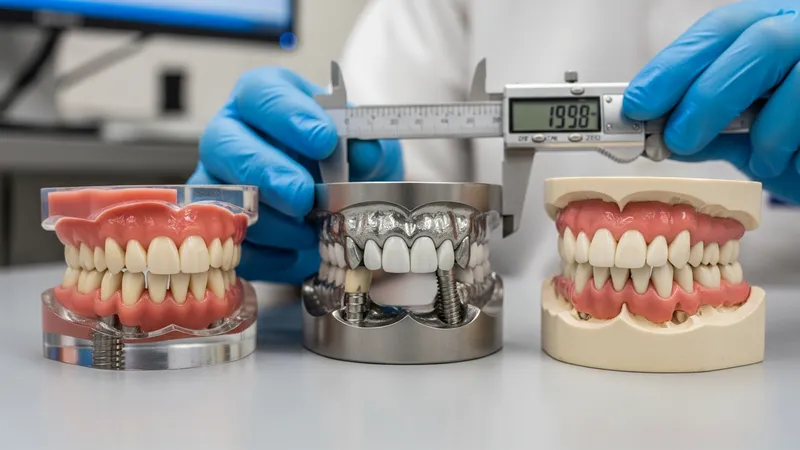
Framework design and connector position are essential for achieving passive fit and even load distribution across implants. Frameworks may be milled from titanium or other surgical alloys to provide a rigid substructure that resists deformation under function. Prosthetic screw access channels are planned to avoid occlusal table interference when possible, and angled abutment components can be used to correct screw access orientation for tilted implants. Lab communication and digital design files are often used to verify fit before final insertion.
Occlusal scheme choices for definitive restorations commonly aim to reduce lateral forces and to promote axial load distribution across implants. Clinicians often use mutually protected occlusion or other schemes adjusted to the prosthesis design and opposing dentition. Nighttime bruxism considerations may influence material choice or the recommendation of occlusal appliances as a management strategy. Prosthetic maintenance planning, such as scheduled screw checks and hygiene instruction, is typically incorporated into the restorative timeline.
Digital workflows that combine intraoral scanning, CAD/CAM design, and laboratory milling have become more common in prosthetic fabrication. Digital impressions can capture implant positions via scan bodies and facilitate design iterations prior to milling or 3D printing. These workflows may reduce turnaround time for definitive prostheses and allow for better reproducibility of the planned emergence profiles and occlusal schemes. However, clinicians usually evaluate digital accuracy on a case-by-case basis and maintain quality checks during laboratory steps.