
AI Security Tools: How Intelligent Systems Identify And Assess Digital Risks

Risk Scoring Frameworks, Prioritization, and Alert Handling in AI Security Tools
Risk scoring frameworks convert disparate signals into an interpretable metric that aids prioritization. Scores can incorporate dimensions such as exploitability indicators, asset criticality, number of corroborating signals, and temporal urgency. Weighting schemes are typically configurable so organizations can reflect their operational priorities. Scores may be presented with metadata indicating contributing signals and confidence levels to help analysts determine whether to escalate an event. This practice supports resource allocation by focusing attention on higher-scoring items while acknowledging inherent uncertainty.
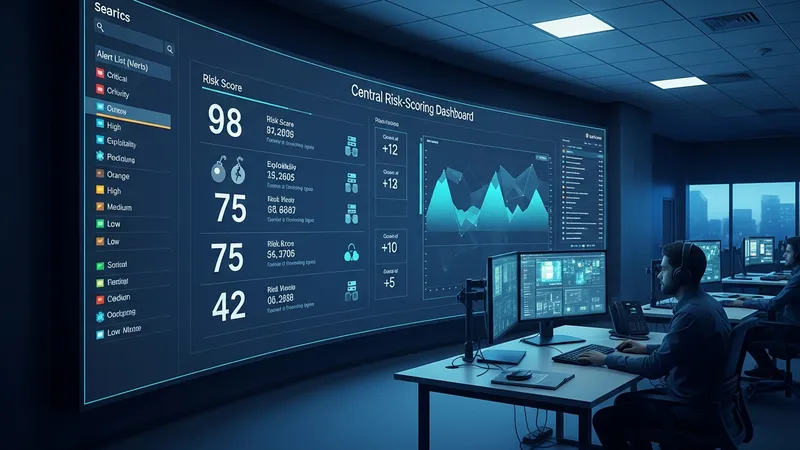
Prioritization strategies often combine automated scoring with analyst input to tune alert routing and noise reduction. For example, low-severity alerts may be batched for periodic review while higher-severity events trigger immediate triage workflows. Thresholds used to classify severity are commonly adjusted based on observed false-positive rates and analyst capacity. Over time, feedback loops that incorporate analyst dispositions can recalibrate scoring to better align automated priorities with operational realities.
Alert handling processes benefit from contextual detail accompanying scores. Context can include recent activity timelines, correlated events across systems, and any enrichment data that supports quicker decision-making. Well-structured context reduces investigation time by surfacing relevant evidence. However, excessive context or poorly organized details may overwhelm analysts, so balance and thoughtful presentation of contributing factors are typical design considerations in alerting systems.
Evaluation of scoring systems often uses measured metrics such as precision, recall, and time-to-triage, treated as indicators rather than guarantees of future performance. Regular assessment under simulated scenarios or historical replay can reveal how scoring behaves under different conditions and whether thresholds require adjustment. These assessments are usually framed as part of continuous improvement practices to maintain alignment between automated risk assessments and human operational needs.