
AI Security Tools: How Intelligent Systems Identify And Assess Digital Risks

Data Inputs, Feature Engineering, and Contextual Enrichment for Risk Assessment
Telemetry diversity and quality are foundational to how intelligent systems assess digital risks. Common inputs include system logs, DNS and HTTP request records, authentication events, process creation logs, and application traces. Good feature engineering transforms these raw inputs into signals such as uncommon port usage, atypical timing patterns, or anomalous access sequences. Time-window selection, sessionization, and entity resolution (linking IPs, users, and devices) are typical preprocessing steps that can influence detection sensitivity and analytic relevance.
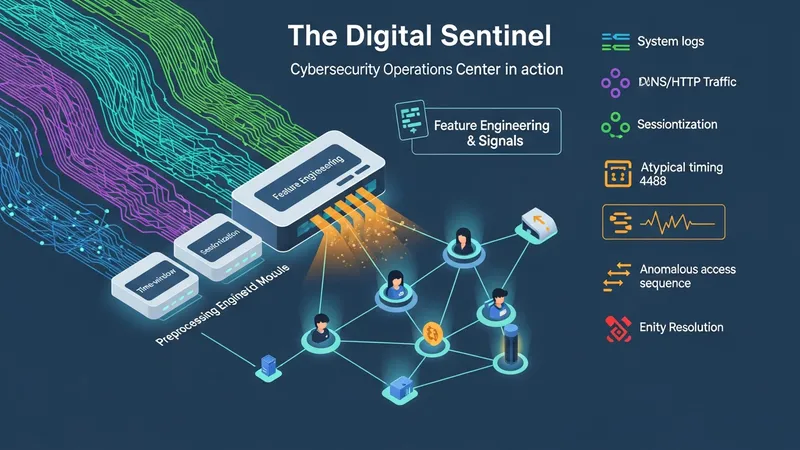
Contextual enrichment often supplements raw telemetry to improve interpretability and prioritization. Enrichment sources may include asset inventories, vulnerability databases, configuration management data, and threat intelligence feeds. For example, combining an anomalous login with a known vulnerable asset or a recent advisory about an exploit can raise the priority of a detection. Enrichment helps models and analysts differentiate between benign unusual events and signals that merit deeper investigation, though it also depends on the timeliness and accuracy of the external data sources used.
Data governance and privacy considerations commonly shape what inputs are available and how they are processed. Masking, aggregation, and selective retention are techniques that may be applied to reduce exposure of sensitive information while preserving analytic value. Data completeness and labeling availability often determine whether supervised learning is feasible; where labels are scarce, unsupervised or semi-supervised methods may be preferable. These trade-offs typically influence both technical design and policy decisions around telemetry collection.
Feature selection and validation practices help manage model performance over time. Analysts may monitor feature importance measures, perform ablation tests, or simulate attack scenarios to assess how features contribute to detection. Regular review of feature drift and recalibration processes can mitigate performance degradation as operational patterns evolve. These validation activities are often framed as ongoing considerations to maintain effective identification and assessment of digital risks rather than one-time setups.