
AI Recruiting Agents: How HR Teams Automate Candidate Sourcing And Screening

Performance measurement and bias mitigation for AI recruiting agents
Measuring agent performance in U.S. recruiting operations typically involves metrics such as precision of candidate matches, rate of human review overrides, and time saved per screened application. Precision refers to the share of flagged candidates who are deemed relevant by human reviewers; recall refers to how many suitable candidates an agent surfaces from the available pool. U.S. teams may track both to understand trade-offs between narrowing results and overlooking potential fits.
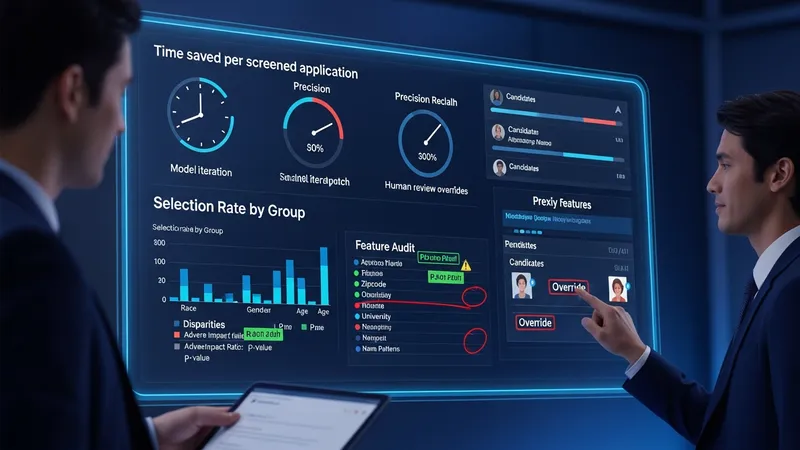
Bias mitigation strategies used in U.S. practice often include regular adverse impact testing across protected characteristics, feature audits to identify proxies for sensitive attributes, and human review checkpoints for automated exclusions. Adverse impact testing may use standard statistical analyses to compare selection rates across groups; teams typically interpret results cautiously and iterate on model design and data inputs to reduce disparities.
Operational tips reported by U.S. practitioners include starting with conservative thresholds that favor inclusivity, logging model decisions for later analysis, and scheduling periodic model revalidation to account for changes in role requirements or applicant pools. Human feedback loops—where recruiters flag false positives and false negatives—can be used to refine model behavior over time.
Transparency is often emphasized in U.S. contexts: providing clear descriptions of what the agent does and how scores are produced helps recruiters and candidates understand automated steps. Transparency practices may include internal documentation for HR teams and candidate-facing statements that explain the use of automated tools without making performance guarantees.