
AI Recruiting Agents: How HR Teams Automate Candidate Sourcing And Screening

Data, privacy, and regulatory considerations for AI recruiting agents
U.S. HR teams deploying AI recruiting agents must attend to privacy and regulatory guidance from agencies such as the Equal Employment Opportunity Commission (EEOC) and, where applicable, state privacy laws. The EEOC has issued guidance on using employment-related algorithms and assessments, noting concerns about disparate impact and the need for consistent documentation. State laws like the California Consumer Privacy Act (CCPA) may affect how candidate data is collected, stored, and disclosed.
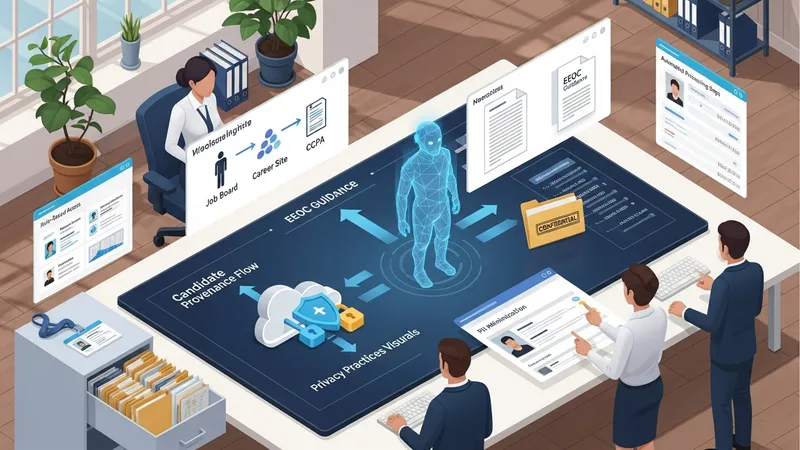
Data handling practices commonly used in U.S. deployments include minimizing storage of personally identifiable information when not needed, implementing role-based access controls, and maintaining logs of automated processing steps. Teams often document data provenance—where candidate data was sourced—to support compliance reviews. Privacy notices and consent processes for applicants can be adapted to describe automated processing in clear terms.
Fairness and bias considerations are important in U.S. contexts because models trained on historical hiring data can reflect past patterns that disadvantage protected groups. Common mitigations include running adverse impact analyses, using diverse training data where possible, and retaining manual review steps for borderline cases. Many U.S. employers engage legal or compliance teams to review model outputs and assessment criteria before broad deployment.
For auditability, U.S. HR teams frequently preserve copies of candidate records and model output scores so reviewers can trace how decisions were produced. Documentation of model configuration, feature selection, and validation results helps organizations respond to inquiries and internal governance. These practices are framed as controls rather than guarantees and are part of responsible deployment considerations.