
AI Marketing Automation: Key Features, Use Cases, And Implementation Steps

Use cases and industry examples in South Korea: Key Features, Use Cases, and Implementation Steps
Common use cases include personalized product recommendations, lifecycle messaging for subscription services, and automated post-purchase communications. In Korea’s retail sector, e-commerce merchants on platforms like Cafe24 often use automation to send cart recovery sequences via KakaoTalk or e-mail. Financial services and telecom companies may automate transactional notifications and upsell sequences linked to customer usage signals. Each use case typically requires mapping business events to automated triggers and ensuring messages align with domestic consumer expectations for language and timing.
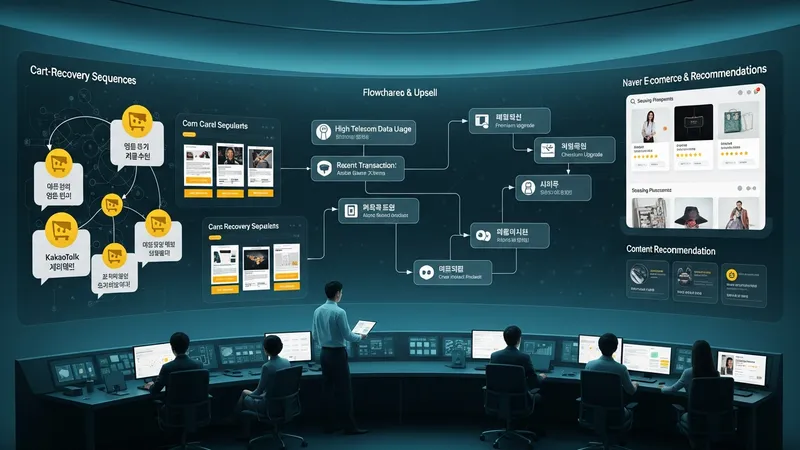
Content recommendation and targeted advertising are additional examples where machine learning is used to match content to user interests. Domestic content recommendation providers may integrate with news portals or shopping listings common in Korea. For publishers and retailers, recommendations may be served via Naver search or in-app placements; implementation steps usually include instrumenting content metadata, training personalization models, and monitoring click-through behavior to adjust relevance models.
Conversational automation and chat-based customer service are widely applied in Korea, often via KakaoTalk or integrated chat widgets. Companies may deploy automated responders for routine inquiries and escalate to human agents for complex issues. Implementation requires training intent classifiers on Korean language corpora and integrating with backend order and CRM systems to fetch customer-specific data. Teams commonly evaluate fallback rates and customer satisfaction metrics to iterate on conversation flows.
Cross-channel orchestration ties together these use cases so that customer journeys are coherent across touchpoints. For example, a user who views products on a mobile app might later receive a KakaoTalk reminder or a targeted Naver ad. Implementation steps often include unifying customer identifiers, defining attribution windows, and creating rules for message suppression to avoid overcontact. In practice, organizations may pilot small workflows and expand once data alignment and suppression logic are functioning.