
AI Finance Agents: How Intelligent Tools Support Accounting Automation

Integration and data flows for AI finance agents in accounting systems
Integration patterns usually rely on APIs, secure file transfers, and bank connectivity services. Agents ingest data from bank feeds, payment platforms, ERP records, and invoice directories. In the United States, common ledger targets include QuickBooks Online and enterprise ERPs; third-party connectors such as Plaid or direct bank APIs are often used to bring transaction data into the processing pipeline. Proper mapping of vendor IDs, accounts, and tax codes is commonly performed during setup to ensure that automated outputs align with existing financial structures.
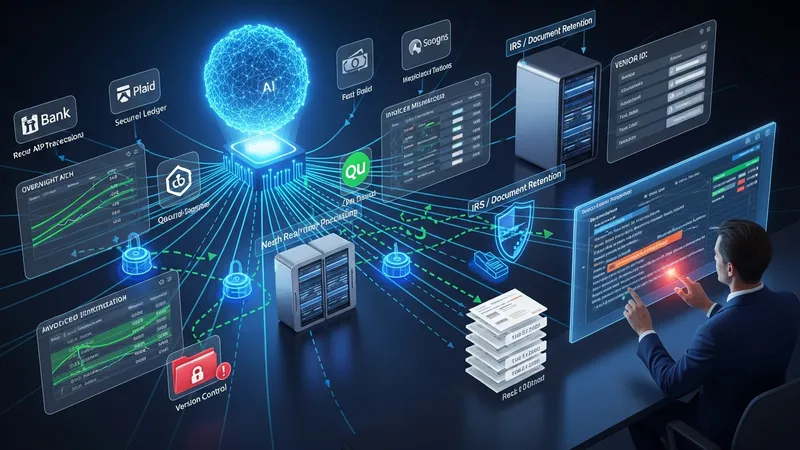
Data flow design must address latency, error handling, and reconciliation between source systems. Typical deployments batch-process incoming documents overnight or process items in near real time depending on business needs. Error-handling patterns include quarantining unrecognized invoices, flagging mismatches for manual review, and maintaining versioned records of automated suggestions. U.S. organizations frequently validate that data retention and access controls meet IRS document retention expectations and any sector-specific compliance rules.
Security and data residency are practical integration considerations. Many vendors host services within U.S. data centers or provide contractual assurances about where data is stored; these choices are often reviewed in light of corporate policies and regulatory requirements. Encryption in transit and at rest, role-based access controls, and logging of administrative actions are standard features that finance and IT teams inspect during procurement and integration testing phases.
Insider considerations include mapping automation outputs to existing reconciliation schedules and audit workflows, synchronizing posting windows to month-end close calendars, and planning for fallback procedures if connectors fail. Teams may also set up dashboards to monitor throughput, exceptions, and human override rates to inform tuning and governance decisions over time. These items are presented as typical considerations rather than endorsements of any specific technical approach.