
AI Finance Agents: How Intelligent Tools Support Accounting Automation

Types of intelligent finance assistants used in accounting automation
There are several functional types of intelligent agents deployed within U.S. accounting environments. Transaction classification agents analyze bank feeds and map entries to chart-of-accounts codes, often using historical labeling to suggest categories. Invoice capture agents apply OCR and NLP to extract vendor, date, line items, and amounts from submitted invoices and receipts. Reconciliation engines compare ledger balances to external statements to identify mismatches and suggest adjustments. Cash-flow assistance or forecasting agents use historical inflows and outflows to generate short-term liquidity projections that finance teams may use for planning.
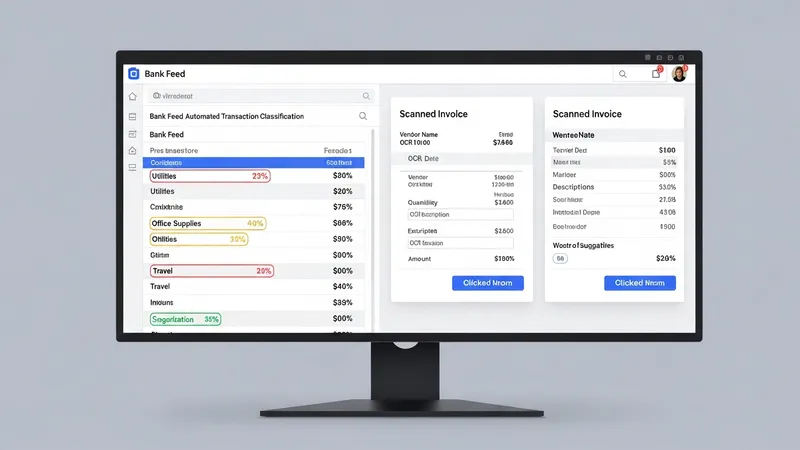
Each type typically integrates with existing systems: small businesses often connect transaction classifiers to QuickBooks Online or similar ledgers, while larger enterprises link reconciliation engines to ERP systems and subledger modules. In the U.S., teams may verify that extracted invoice fields satisfy IRS documentation requirements and that allocations comply with GAAP. Where models produce uncertain suggestions, many implementations route items to human reviewers to confirm or correct outputs, helping preserve the audit trail.
Performance expectations differ by type. OCR-based invoice extraction may frequently require template tuning for diverse vendor formats, while transaction classifiers often improve quickly with consistent vendor patterns and recurring transactions. Reconciliation engines can automate low-complexity accounts first (e.g., cash and bank), then extend to more complex subledgers. Consideration of internal control frameworks and potential SOX requirements for public companies is often part of the design phase in U.S. enterprise deployments.
Operational considerations include monitoring model drift, logging decisions for auditability, and maintaining mappings between automated outputs and the organization’s chart of accounts. Teams commonly plan phased rollouts: piloting one agent type, evaluating metrics such as match rate and manual override frequency, and scaling once governance and accuracy criteria are met. These steps are described to inform planning rather than to prescribe a single approach.