
Advanced Industrial Machines: Key Technologies And Automation Capabilities

Motion and Robotics Integration in Advanced Industrial Machines
Motion systems and robotics are commonly integrated to provide positioning, handling, and processing tasks within automated machines. Integration often involves coordinating motion controllers, robot controllers, and auxiliary devices such as grippers, vision systems, and conveyors. Communication standards and motion synchronization strategies may be used to ensure accurate handoffs between devices. Engineers typically assess the required axes, payloads, and cycle times to select suitable actuators and control approaches.
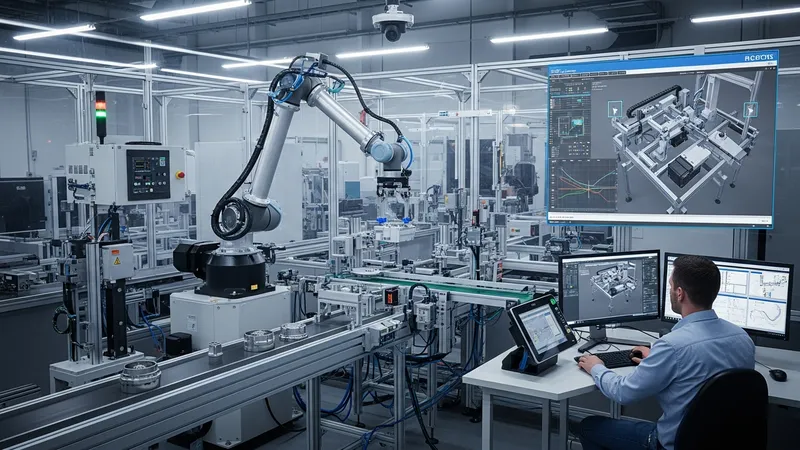
Robot programming paradigms may include teach pendant programming, offline simulation, and trajectory generation. Offline programming can reduce on-line commissioning time by allowing path validation in virtual environments before deployment. Vision-guided robotics may enable adaptive handling where parts vary in position or orientation; these systems often use cameras combined with processing algorithms to provide pose estimates that adjust robot motions. Such configurations may improve flexibility but can add complexity to system tuning and maintenance.
Mechanical design and fixturing are important considerations when integrating motion equipment, since compliance, backlash, and resonance can affect accuracy and repeatability. Motion control strategies such as feedforward, PID tuning, and trajectory shaping can mitigate some mechanical limitations. Selection of encoders, resolvers, and feedback devices typically depends on environmental conditions and required precision. Engineers often document expected tolerances and perform verification tests during commissioning to confirm performance.
Safety and collaborative operation are additional aspects to address when robots and humans share space or interact closely. Collaborative robot cells may use reduced speed, force limits, or protective sensing to lower risk, while traditional cells rely on physical barriers and interlocks. Risk assessments can guide the selection of protective measures and influence cycle design. Overall, motion and robotics integration often emphasizes predictable motion performance, measurable positioning accuracy, and clearly defined safety boundaries.