
Advanced Industrial Machines: Key Technologies And Automation Capabilities

Sensing, IIoT, and Data Strategies in Advanced Industrial Machines
Sensors and IIoT components provide the data that enables monitoring, diagnostics, and higher-level process control in advanced industrial machines. Typical sensor types include proximity, photoelectric, temperature, pressure, vibration, and current transducers, each suited to different monitoring needs. Edge devices may preprocess data to filter noise, detect anomalies, or aggregate signals before transmitting to historians or analytics platforms. Decisions about sampling rates and communication protocols often reflect the balance between real-time needs and bandwidth constraints.
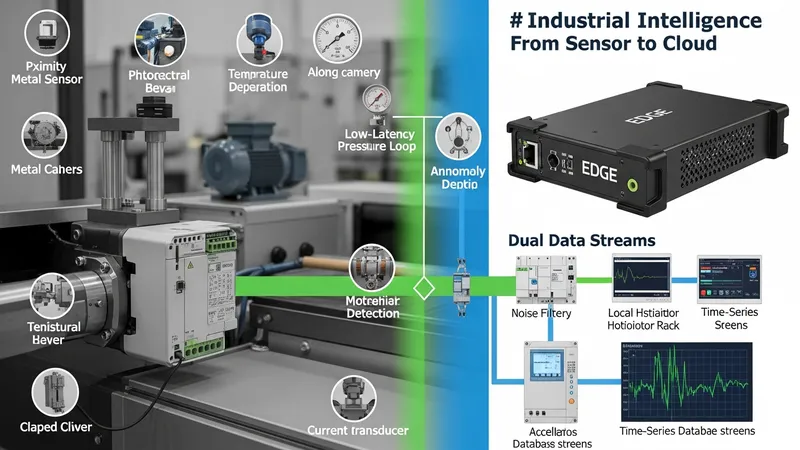
Data strategies commonly separate operational control loops from analytics and reporting functions. Control loops require deterministic, low-latency access to sensor readings, while analytics can tolerate higher latency and benefit from larger historical datasets. Implementation choices may include local historians for short-term playback, time-series databases for longer-term trends, and secure gateways for transferring data to enterprise systems. Considerations include data retention policies, network reliability, and protection of sensitive operational information.
Predictive maintenance models often rely on combining multiple sensor streams to detect early signs of degradation. For example, vibration and current signatures may jointly indicate bearing wear or motor imbalance. Model development typically uses historical failure data and may employ statistical or machine learning techniques; however, models often require ongoing validation to remain effective as production conditions change. Organizations may view predictive analytics as a support tool for maintenance planning rather than an automatic replacement for inspection routines.
Cybersecurity and lifecycle management are important when adding networked sensors and IIoT platforms to machines. Security measures may include network segmentation, authentication, encrypted communications, and regular firmware updates. Lifecycle practices often cover firmware version control, spare parts availability, and supplier support for edge devices. When designing data strategies, stakeholders often weigh the benefits of increased visibility against the need to manage risk and maintain long-term operability.