
Spa Sauna Benefits: How Heat Sessions May Support Stress Relief

Many spas and wellness centres offer sessions where controlled heat is applied in an enclosed space to create a warm, often humid or dry environment. These sessions use elevated air or surface temperatures and are structured so that participants sit or recline for a set period, followed by a cooling phase. The underlying concept is that exposure to warm environments can influence bodily sensations, breathing patterns, and subjective relaxation. Practitioners and facility operators design these environments with temperature, humidity, seating, and timing to produce a predictable sensory and physiological setting.
Within this context, heat-based sessions often aim to support a sense of relaxation and reduction of everyday tension. Environmental factors such as ambient sound, lighting and the presence of other people may shape the experience. Session structure commonly includes a warm period and a cool-down interval, and some facilities pair heat sessions with complementary services such as quiet rest areas or mild movement. Descriptions of effects typically use measured language: heat sessions may contribute to perceived calm, temporary easing of stiffness, or a sense of comfort for some users.
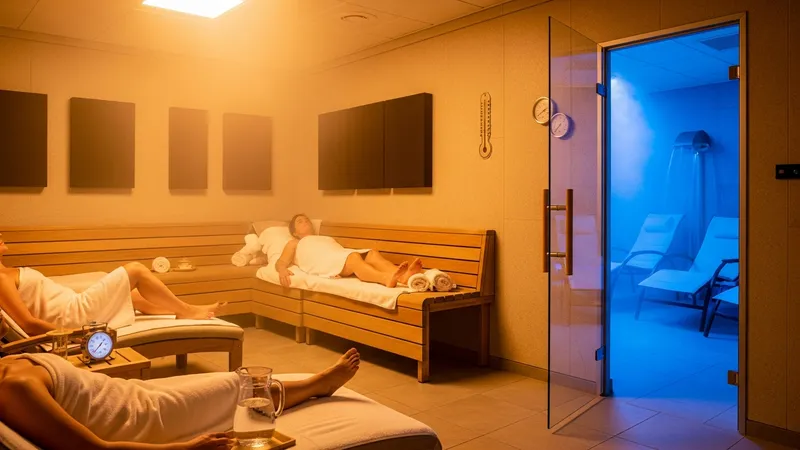
- Finnish-style dry sauna: A wood-lined room heated to roughly 70–100°C with low humidity; sessions often feature short intervals with cooling breaks.
- Steam room (Turkish-style): A high-humidity environment at lower air temperatures, typically around 40–50°C, where steam creates a moist heat and high relative humidity.
- Infrared sauna: Panels emit radiant heat that may warm the body directly at lower ambient air temperatures, often used for shorter exposure times compared with traditional saunas.
Heat exposure in these different formats tends to produce similar sensory patterns—warm skin sensations, increased perspiration, and a shift in perceived thermal comfort—while varying in humidity, intensity, and surface materials. Facility features such as bench height, ventilation, and material choices affect how heat is experienced. For example, a dry wooden space can feel drier at higher temperatures, while a steam-filled environment feels warmer at lower temperatures due to humidity. Users may notice distinct subjective sensations across formats, and these patterns are often considered when choosing a particular session type.
Session environments also shape psychological aspects of the experience. Quiet rooms, subdued lighting, and minimal interruptions can support focused breathing and lowered stimulation, which many people describe as calming. Social context matters as well: solitary sessions may feel restorative to some, while others may prefer shared spaces where social norms guide quiet behaviour. Soundscapes, scent choices, and post-session rest areas are commonly adjusted by operators to create a cohesive environment that aligns with typical expectations for relaxation-oriented services.
Designing a session protocol typically involves balancing temperature, duration, and recovery time. Traditional practice often pairs 10–20 minute heat periods with cooling or rest periods, though specific timings vary by facility and modality. Infrared sessions may be shorter in duration because of different heating mechanics. Operators commonly advise incremental exposure for first-time users, and many facilities provide informational signage about typical session lengths. These structural elements are framed as considerations rather than mandates, since individual tolerance and preferences differ.
Perceptions of stress relief after heat sessions are usually subjective and influenced by context, prior expectations, and concurrent behaviours such as hydration, light movement, or rest. Reports from facility users and wellness literature often suggest that many people feel a temporary reduction in muscle tension and a heightened sense of relaxation immediately after sessions. It is important to frame such observations as experiential and provisional: responses can vary considerably across individuals and settings, and consistent outcomes are not guaranteed.
In summary, controlled heat sessions at spas and similar facilities are structured experiences that combine temperature, humidity, timing, and environment to create conditions some people find relaxing. Different modalities—dry saunas, steam rooms, and infrared units—offer varied thermal and sensory characteristics. Session design, social context, and individual factors typically influence subjective responses. The next sections examine practical components and considerations in more detail.