
Small Business Liability Insurance: Key Coverages And What They May Protect

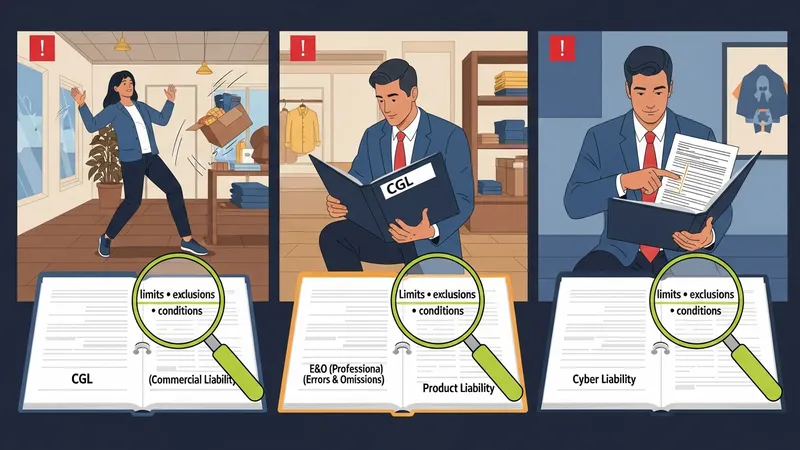
Coverage Types and How They May Protect a Business
Commercial General Liability (CGL) is commonly the foundational policy for small business third-party exposures in the United States. It may respond to claims alleging bodily injury occurring on business premises or caused by operations, and to some forms of property damage. Advertising injury provisions in many CGL forms may address certain media-related claims. For professional mistakes or advisory services, firms often seek a separate professional liability or errors & omissions (E&O) policy, because general liability forms can exclude negligent professional acts. These distinctions often determine which policy responds to a specific allegation.
Product liability coverage is relevant when a business manufactures, distributes, or sells goods that could cause injury or property damage. In the U.S., claims arising from products may trigger product-completed operations cover within a CGL policy or require specialized product liability wording for manufacturers. Cyber liability policies are increasingly used by small firms that process personal data; these typically address breach response, notification costs, and third-party liability for privacy harms. Each coverage type typically contains its own limits, exclusions, and conditions, which influence how a loss may be handled.
Employment-related liability exposures commonly arise in U.S. workplaces and are often addressed through distinct policies. Employment Practices Liability Insurance (EPLI) may respond to claims of wrongful termination, harassment, or discrimination; such claims are often excluded from a standard CGL form. Workers’ compensation remains a separate statutory program addressing employee injuries on the job, and may interact with liability policies in certain situations. Contractual risk transfer—through indemnity clauses—can also shift potential liability and may affect insurance needs.
Insider considerations for U.S. small businesses include understanding which incidents typically fall within primary policies versus those requiring supplemental coverage. For example, a retail shop facing a slip-and-fall claim may rely on CGL, but a consultant facing an allegation of negligent advice may look to E&O coverage. Businesses often examine common client or landlord insurance requirements and adjust endorsements accordingly. These practical alignments between exposures and policy types help clarify where particular incidents may be directed for coverage evaluation.