
Revenue Operations Platforms: Aligning B2B Sales, Marketing, And Customer Success

Revenue operations platforms: Operational workflows and cross-functional processes
Workflow orchestration in RevOps platforms often codifies cross-team processes to reduce manual handoffs. Typical workflows include lead qualification, territory assignment, and escalation paths for at-risk accounts. In United States B2B organizations, these workflows may reflect compensation structures, regional coverage, and product lines. Documenting the business rules that drive automation—qualification criteria, required fields, and SLA expectations—can help teams align technical configuration with operational intent without creating rigid dependencies.
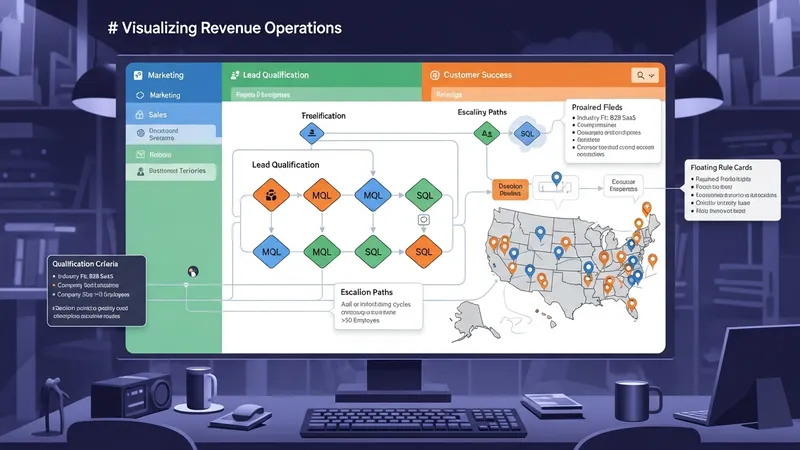
Lead-to-account matching and routing are common operational patterns that may be automated. For midsize and enterprise US companies, lead routing often incorporates account-based logic, territory ownership, and account scoring derived from engagement signals. Rules engines within platforms can apply these criteria consistently, but they typically require periodic review to reflect changes in sales strategy. Monitoring the outcomes of routing rules, such as acceptance rates and conversion timelines, can inform iterative refinements.
Renewals and expansion workflows often cross sales and customer success teams and may rely on combined signals such as usage, NPS, and contract terms. In the United States, contract renewal timelines and revenue recognition practices can affect when alerts must be issued to account teams. Platforms may support cadence automation for outreach and reminder notifications, but governance around who may adjust these sequences is usually defined to prevent conflicting outreach and preserve customer experience.
Governance and change control are practical considerations to maintain operational integrity. US organizations often adopt staged deployment processes—sandbox, pilot, and production—so that workflow changes are validated before wide release. Access controls, role-based permissions, and change logs are commonly used to manage who can alter routing rules or reporting logic. These controls typically help maintain consistent operations as the RevOps configuration evolves with business needs.