
Revenue Operations Platforms: Aligning B2B Sales, Marketing, And Customer Success

Revenue operations platforms: Data and integration components
Data ingestion and integration typically form the backbone of RevOps platforms. In US B2B contexts, connectors to cloud CRMs such as Salesforce, marketing automation systems, and support platforms are common. Integration strategies may use API-based connectors, ETL pipelines, or streaming approaches to capture events from product usage. Teams often evaluate how each method affects data freshness and historical reconciliation. Considerations for United States companies can include data localization preferences and compliance with state-level privacy requirements such as the California Consumer Privacy Act (CCPA).
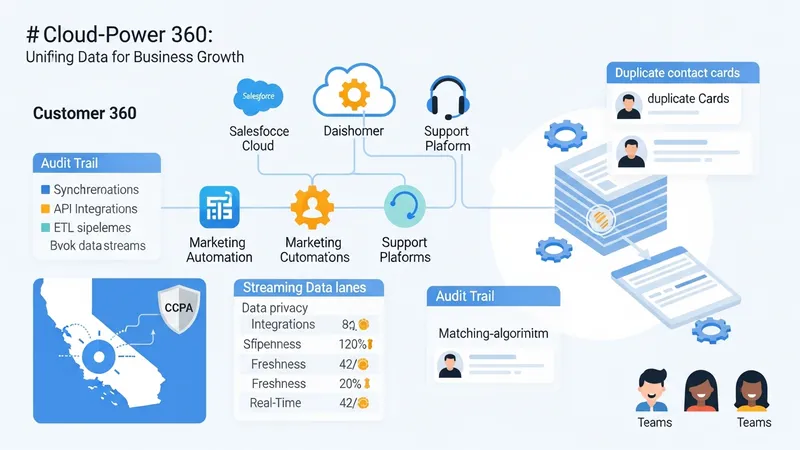
Data quality and deduplication are practical issues that often surface during rollouts. Platforms may provide matching algorithms to consolidate contact and account records, but these routines typically require tuning for company-specific fields and naming conventions. US teams commonly allocate time for manual review cycles and rule refinement to reduce false merges. Logging and audit trails are often used to track changes so that revenue reporting remains auditable across sales and customer success touchpoints.
Attribute mapping for marketing and sales signals is another frequent task. Marketing attribution models—first-touch, last-touch, or multi-touch—may be supported within a platform, and organizations in the United States commonly select a consistent attribution approach across teams to avoid metric drift. Where product usage data contributes to account scoring, teams often standardize event schemas and retention windows to ensure comparability. Clear mapping reduces disputes about lead sources and pipeline origins.
Integration performance and monitoring should be considered early. US companies often set service-level objectives for data latency, especially for near-real-time use cases like routing sales alerts. Monitoring dashboards that surface connector failures, data backfills, and schema changes can minimize interruptions. These operational precautions typically reduce the time required to diagnose issues and keep cross-functional reports current, enabling more reliable forecasting and operational coordination.