
Recurring Revenue: Understanding Subscription-Based Business Models

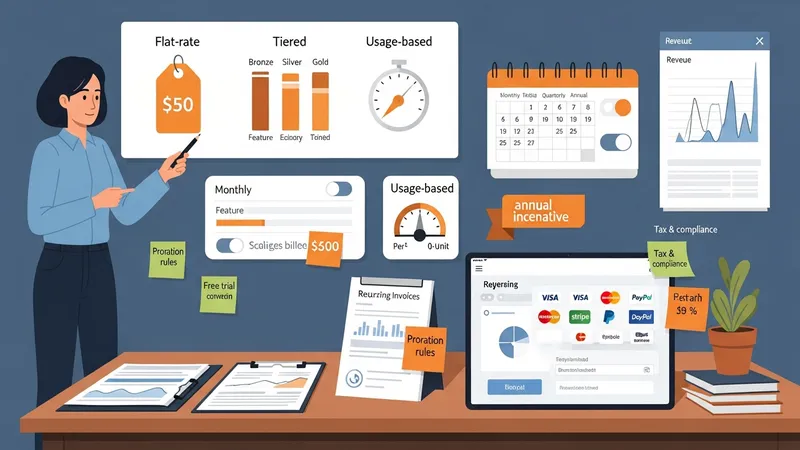
Pricing and billing structures for subscription-based recurring revenue
Pricing approaches for subscription models commonly include flat-rate, tiered, and usage-based structures, each with distinct implications for predictability and customer behavior. Flat-rate plans provide simplicity and may suit users with stable needs; tiered plans group features or capacity into segments to address diverse requirements; usage-based billing ties charges to actual consumption and may align costs with value delivered. Billing cadence—monthly, quarterly, or annual—affects cash flow and retention dynamics, and providers often offer different incentives for longer commitments while framing those incentives cautiously as potential value alignment rather than assured outcomes.
Billing technicalities influence operational resilience. Providers may use recurring invoicing, tokenized payment methods, or direct debit systems depending on regional payment infrastructure. Proration rules for mid-cycle changes and rules for free trial conversions are practical considerations that can affect perceived fairness and revenue timing. Tax treatment and regulatory compliance for recurring charges vary by jurisdiction; implementing appropriate tax calculation, remittance, and reporting processes is typically necessary for accurate accounting and regulatory adherence without implying uniform global rules.
Pricing experimentation is typically treated as iterative learning rather than a one-time decision. A common approach is to test packaging changes with defined segments and to monitor conversion, churn, and lifetime value metrics. Communication around price changes often includes clear notice periods and transparent rationale to maintain trust. Providers may also implement feature gating or add-ons to allow granular monetization without changing base plans, accepting that incremental complexity may increase administrative overhead.
When evaluating payment processors and billing platforms, considerations often include support for multiple payment methods, reporting capabilities, webhook integrations for lifecycle events, and retry/dunning functionality. Security standards such as PCI compliance and encrypted storage for payment tokens are frequently assessed. For emerging use cases, integration with analytics systems that feed into revenue and customer health dashboards can support more informed pricing decisions while acknowledging that technical integration effort and cost can vary by provider.