
Pumps And Fluid Handling Equipment: Key Types, Applications, And Selection Factors

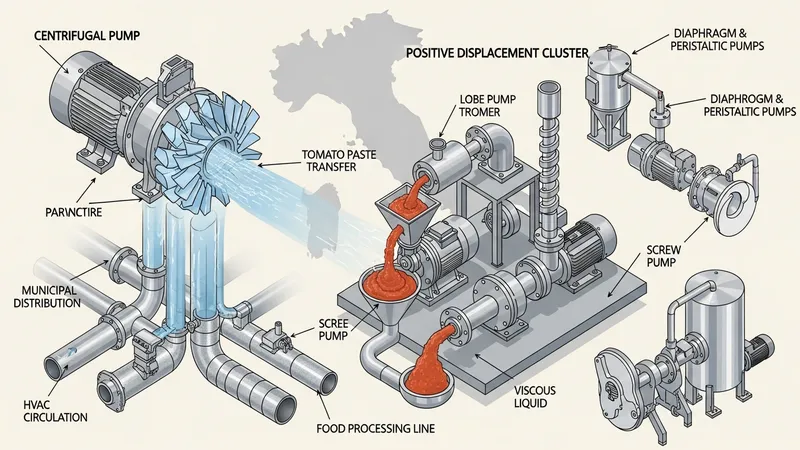
Types of pumps and fluid handling equipment: functional characteristics
Centrifugal pumps convert rotational motion to fluid energy through an impeller; they are typically applied where flow rates are substantial and fluid viscosity is low. In Italy, centrifugal designs are widely used in municipal distribution systems and HVAC circuits. Positive displacement pumps, including gear, lobe, and screw variants, provide volumetric flow that is less sensitive to pressure, making them suitable for dosing, metering, and handling viscous fluids found in food processing plants across Italy. Diaphragm and peristaltic pumps provide fluid isolation and are common for chemical dosing and abrasive slurries where leakage control is essential.
Submersible pumps are another widely used category for dewatering, sewage pumping, and well installations; these are often specified in Italian construction and civil works projects. Self-priming and dry-running tolerant units are chosen for certain site conditions. Metering pumps and progressive cavity pumps are frequently used where steady low-flow delivery under pressure is needed, such as in dosing additives or pumping viscous pastes in industrial lines found in northern Italian food manufacturing hubs.
Material and seal assemblies affect performance across types. Mechanical seals, gland packing, or encapsulated drive systems are chosen depending on the fluid’s abrasiveness, toxicity, and temperature. In Italy’s regulated sectors, hygienic seals and polished wetted surfaces are often applied to comply with sanitary standards. Manufacturers and operators commonly document compatibility testing when switching fluids to avoid unexpected corrosion or seal failure.
Manufacturing origin and supply chain factors influence availability and support. Italian pump makers and regional distributors may supply materials and spare parts more quickly to local plants, which can be relevant for continuous operations. Sourcing decisions often weigh initial purchase price against predicted maintenance intervals and energy consumption in projected operational scenarios, typically using case-by-case estimates rather than absolute rules.