
Private Lending For Property: Key Features, Loan Structures, And Typical Uses

Private Lending for Property: Typical Uses and Borrower Profiles
Private property financing is commonly used for short-term investment strategies like rehabilitation and resale (house flipping). In these cases, borrowers in the United States may seek quick closings and project-specific underwriting that focuses on projected after-repair value (ARV). Another common use is bridge financing, where borrowers need temporary capital to purchase a property before securing longer-term financing or completing an intended sale. Construction-phase lending from private sources can also occur for smaller development projects that may not meet conventional construction-lender criteria.
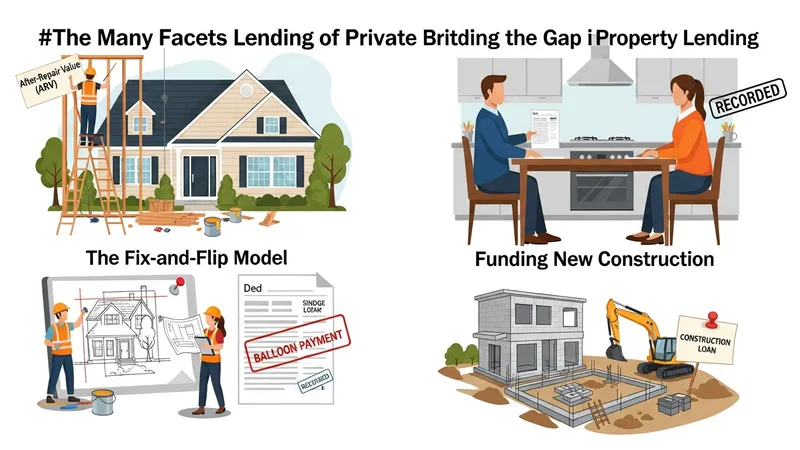
Owner-financing and seller-carried mortgages are forms of private lending used in residential transactions to bridge buyer credit or timing constraints. In seller-financing arrangements, the seller retains a security interest and the buyer makes payments to the seller under negotiated terms. These structures are often documented as promissory notes secured by deeds, and they may include amortization schedules or balloon payments. In the United States, parties commonly document these agreements carefully and consider state recording requirements and tax implications.
Borrower profiles for private property loans typically include investors with prior project experience, small-scale developers, and homeowners seeking alternative financing options. Credit histories may vary; lenders often prioritize the property’s cash-flow potential or resale prospects. In many U.S. metropolitan areas, experienced borrowers with a track record of completed projects can access more competitive private financing terms, while first-time private borrowers may face higher rates or additional collateral requirements to compensate for perceived risk.
Geographic market differences in the United States influence typical uses and availability. Active private lending markets often appear in regions with strong investor activity or supply constraints, such as mid-size and large metropolitan areas where renovation and short-term investment are common. Borrowers and lenders in these markets usually consider local sale timelines, permitting processes, and contractor availability when assessing project feasibility and structuring loan terms.