
Private Lending And Alternative Financing: An Introduction To Non-Bank Funding Options

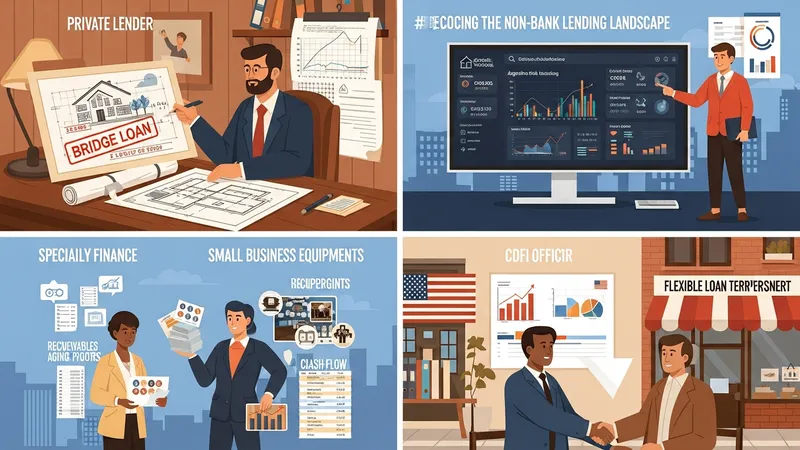
Types of non-bank lenders and financing structures in the United States
Non-bank lenders in the U.S. encompass a set of institution types that commonly include private individual or institutional lenders, online marketplace platforms, specialty finance companies, and CDFIs. Private lenders often provide secured bridge or asset-based loans for real estate and commercial purposes, using property appraisals and liens as primary underwriting tools. Marketplace platforms facilitate consumer and small-business loans by aggregating investor capital and applying automated credit models. Specialty finance firms may focus on invoices, equipment, or receivables financing, tailoring documentation to commercial cash flow. CDFIs operate with a mission focus and may combine flexible terms with community development metrics.
Underwriting frameworks vary by lender type. Private lenders may prioritize collateral value and loan-to-value ratios and can set bespoke covenants; marketplace platforms tend to emphasize borrower credit history, income verification, and algorithmic risk scoring; specialty lenders evaluate business cash flow and receivables aging reports. CDFIs may assess both financial viability and community impact. Each structure can influence required documentation, closing timelines, and permissible loan features such as prepayment terms or interest-only periods, which borrowers typically need to evaluate relative to project timelines.
Examples from the United States illustrate operational differences. Lending platforms such as LendingClub and Upstart use standardized application processes and investor distribution models, which may support quicker approvals for eligible borrowers. Private lending firms active in real estate finance commonly negotiate individualized terms and may require title and appraisal work. CDFIs certified by the U.S. Treasury’s CDFI Fund often provide targeted small-business or affordable housing financing with supplemental technical assistance. These differences can affect availability, pricing, and administrative burden.
When selecting a non-bank route, parties often consider liquidity, transparency, and scalability. Marketplace loans can offer scalable production where underwriting is automated and investor demand is strong, while private lenders may offer bespoke, flexible terms at the cost of less predictable secondary liquidity. CDFIs provide mission-aligned options that may fit organizations seeking community outcomes. Readers may find it useful to map financing needs—term, collateral, required disbursement timeline—against the operational characteristics of these lender types to identify compatible structures.