
Orthopedic Surgery: Overview Of Common Procedures And Care Pathways

Orthopedic surgery is the medical specialty that addresses conditions affecting the musculoskeletal system, including bones, joints, ligaments, tendons, muscles, and nerves. The field encompasses a range of procedural approaches intended to restore function, reduce pain, or stabilize structures after injury or disease. Common procedural categories include joint-preserving techniques, joint replacement, minimally invasive arthroscopy, and fixation of fractures; each category involves distinct diagnostic steps, operative methods, and recovery pathways. Discussion of these areas typically emphasizes clinical assessment, imaging, and multidisciplinary planning rather than predicting individual outcomes.
Care pathways in orthopedic surgery describe the sequence of clinical steps that guide a patient from initial assessment through recovery and follow-up. These pathways often integrate preoperative evaluation, perioperative management, standardized operative protocols, and staged rehabilitation plans. Elements such as comorbidity assessment, imaging review, and coordination with physical therapy services commonly shape pathway design. Pathways may vary by procedure type, institution, and regional practice patterns, and they frequently aim to align clinical resources with measured recovery milestones while remaining adaptable to patient-specific factors.
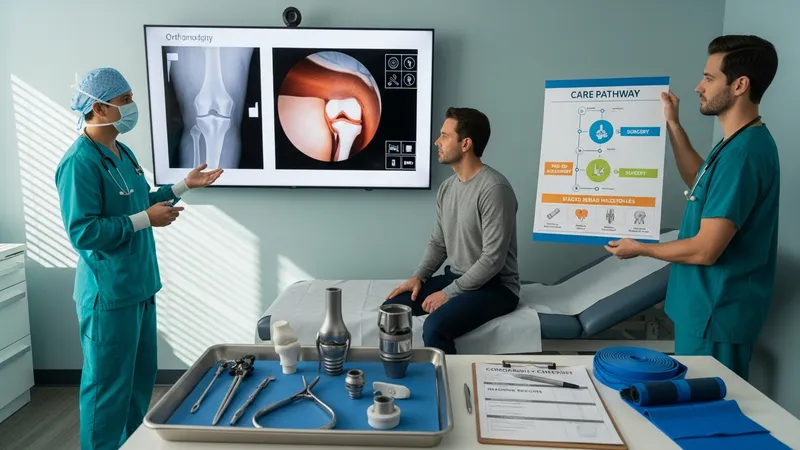
- Joint replacement procedures (arthroplasty) — surgical replacement of joint surfaces, commonly applied to hips and knees, intended to address advanced joint degeneration; such procedures may involve implant selection and modular techniques.
- Arthroscopic procedures — minimally invasive interventions using small incisions and a camera to treat intra-articular conditions such as meniscal tears or labral pathology; these methods often focus on tissue preservation and targeted repair.
- Fracture fixation methods — open or percutaneous techniques using plates, screws, intramedullary nails, or external fixation to stabilise broken bones and allow healing; fixation choices typically depend on fracture pattern and patient factors.
Preoperative planning for orthopedic procedures often includes a structured assessment that may involve medical clearance, imaging, and functional evaluation. Imaging modalities such as X-ray, CT, or MRI typically inform surgical approach and implant selection, while history and physical examination help identify comorbid conditions that can affect perioperative risk. Preoperative pathways may also incorporate patient education about expected recovery phases and coordination with allied services like physiotherapy and occupational therapy. These preparatory steps are commonly used to align expectations and to reduce variability in perioperative management.
Operative techniques in orthopedics vary widely by anatomical site and intended goal; for example, arthroscopy often focuses on visualization and repair through small portals, whereas arthroplasty involves component alignment and fixation. Surgical teams frequently balance considerations such as tissue handling, implant biomechanics, and blood management when selecting intraoperative strategies. In many settings, standardized checklists and team briefings are used to coordinate roles and equipment needs. Technique selection typically reflects a combination of pathology, surgeon training, and available technology rather than a single universal approach.
Postoperative care pathways commonly include staged rehabilitation plans that progress from protected mobilization to strength and functional training. Early goals often emphasize safe mobilization, pain control using multimodal strategies, and prevention of complications such as wound issues or thromboembolic events. Rehabilitation timelines may vary by procedure; for instance, recovery phases for joint replacement can differ in duration from those for complex fracture fixation. Coordination between surgical teams, rehabilitation professionals, and primary care clinicians often supports continuity of care across these phases.
Multidisciplinary coordination is a central component of many orthopedic care pathways and may involve surgeons, anesthesiologists, nurses, physiotherapists, and case managers. Communication across disciplines can support tailored perioperative plans, particularly for patients with multiple health conditions. Pathway adaptations often occur in response to patient progress, laboratory results, or imaging findings, and ongoing reassessment helps guide decisions about weight-bearing status, activity progression, and timing of follow-up assessments. Such coordination typically aims to match clinical resources to patient needs without prescribing a single standardized regimen.
In summary, orthopedic surgery and its associated care pathways encompass a continuum from detailed preoperative assessment through operative technique selection and staged rehabilitation. Common procedural examples include joint replacement, arthroscopy, and fracture fixation, each with distinct planning and recovery considerations. Pathways often combine standardized elements with individualized adjustments based on patient factors and clinical findings. The next sections examine practical components and considerations in more detail.