
On-Premise Accounting Software: Key Features And Core Capabilities Explained

Costs, maintenance planning, and operational governance
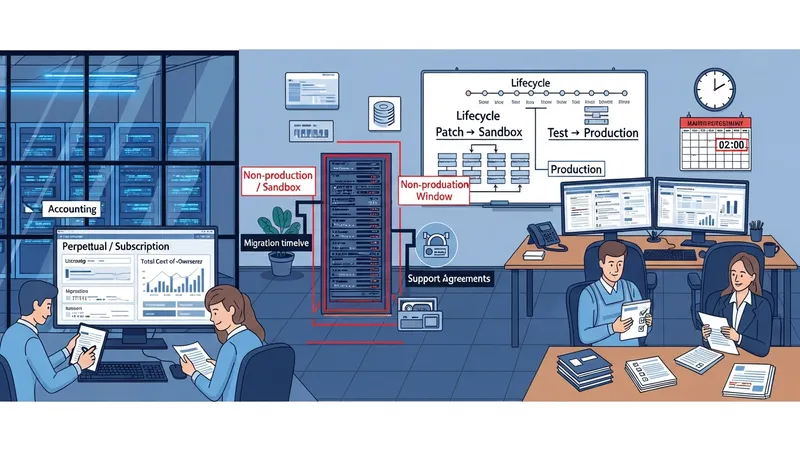
Cost components for on-premise accounting solutions commonly include software licensing, hardware or virtualization costs, implementation services, and internal or contracted administrative staff. Licensing models may be perpetual or subscription-based with maintenance fees; organizations often budget for periodic upgrades and support contracts. Implementation costs typically cover configuration, data migration, integration work, and testing. Organizations may compare anticipated total cost of ownership over several years when planning between on-premise and alternative deployment models.
Maintenance planning includes scheduled patching, vendor updates, and lifecycle management of both software and supporting infrastructure. Organizations often maintain a non-production sandbox for testing vendor patches and customizations before rolling them into production. Regular operational tasks can include reconciliation routines, month-end closings, and audit preparation. Clear maintenance windows and communication processes can help minimize disruption to finance and operational teams during update activities.
Governance structures for on-premise financial systems commonly involve cross-functional committees representing finance, IT, and audit functions. These groups may set policy for change management, access provisioning, and data retention. They often define criteria for approving customizations, integrations, and third-party connectors. Periodic reviews of system configuration, roles, and controls can help ensure alignment with evolving regulatory requirements and internal risk tolerances.
Operational continuity considerations include staffing for support, training for new features, and documented runbooks for common procedures. Organizations typically maintain documentation covering configuration, integrations, backup procedures, and recovery steps to reduce time-to-repair when incidents occur. Periodic tabletop exercises or restore tests are often used to validate recovery assumptions and ensure that teams remain familiar with critical procedures. These practices help maintain reliable financial operations under normal and contingency conditions.