
On-Premise Accounting Software: Key Features And Core Capabilities Explained

Integration, customization, and reporting practices
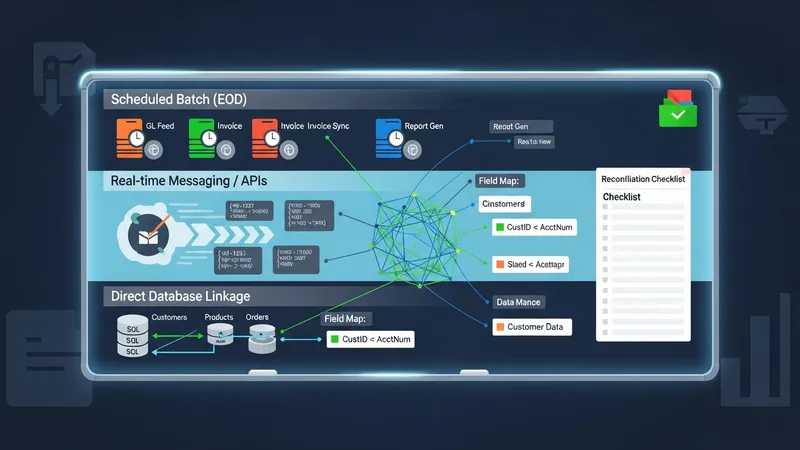
Integration with other enterprise systems often follows patterns such as scheduled batch exchanges, real-time messaging, or direct database linkage. Batch processes may be used for high-volume end-of-day transfers, while APIs can support event-driven updates where available. When planning integrations, teams commonly document data schemas, mapping rules, and reconciliation routines to detect mismatches early. Change control procedures for interfaces can reduce disruption during upgrades, since custom integration points may require revalidation after vendor patches.
Customization practices vary from configuration-only adjustments to deeper code-level modifications. Many organizations prefer configuration and scripting options provided by vendors to reduce upgrade complexity. Where code changes are necessary, teams typically maintain a development and testing environment that mirrors production and follow formal version control and testing protocols. Documentation of customizations, including purpose, technical design, and upgrade implications, is often highlighted as an important operational asset for future maintenance and audits.
Reporting strategies often distinguish between operational reports needed for day-to-day processing and statutory reports required by regulators or tax authorities. Operational reporting may focus on exceptions, aging, and cash position, while statutory reporting adheres to prescribed formats. Organizations sometimes employ separate reporting databases or extract-transform-load (ETL) processes to prepare consolidated datasets for complex reports and analytics. Scheduling, data freshness, and lineage are commonly managed to ensure reliable outputs for stakeholders.
Performance tuning frequently centers on database indexing, query optimization, and hardware provisioning. Regular maintenance tasks such as index rebuilds, statistics updates, and log management can help sustain reporting responsiveness. Scaling strategies might include vertical scaling of server resources or horizontal distribution of reporting workloads to dedicated servers. These choices typically reflect transaction volume, concurrent user counts, and reporting concurrency patterns observed in typical operational cycles.