
On-Premise Accounting Software: Key Features And Core Capabilities Explained

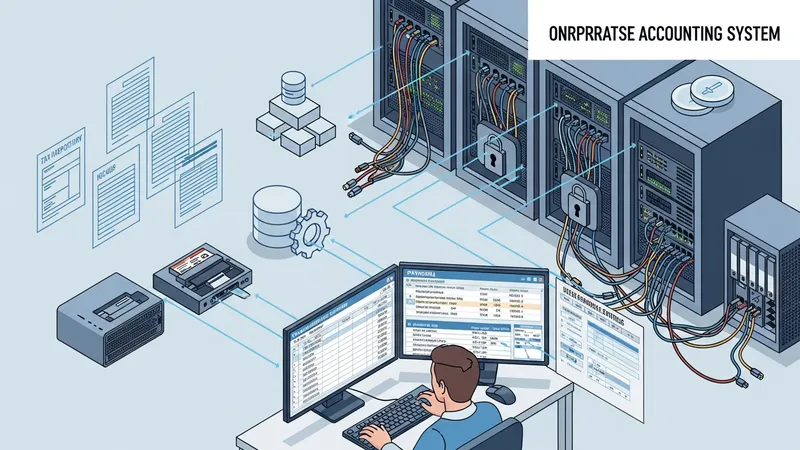
On-premise accounting software refers to financial management applications that an organization installs and operates on its own servers and IT infrastructure. These systems typically include ledgers, accounts payable and receivable processing, payroll interfaces, tax reporting utilities, and user permission controls. By residing within an organization’s network, on-premise software can allow direct administrative access to data stores, local backup strategies, and integration with internal systems such as inventory or manufacturing databases.
Deployment of on-premise financial systems often involves dedicated installation, configuration to match chart of accounts and business rules, and ongoing maintenance by internal IT staff or contracted services. Updates and patches are applied under the organization’s control, and implementations may require database management, network configuration, and periodic audits to maintain data integrity. Organizations may choose on-premise approaches when they need specific customizations or when local data control is a priority.
- SAP S/4HANA (on-premise) — enterprise-class financial and accounting modules designed for large-scale integration with operational systems; often implemented with project-based services and tailored configuration.
- Oracle E-Business Suite — a suite containing financials, procurement, and reporting modules that can be deployed within an organization’s data centre and integrated with existing Oracle databases.
- Microsoft Dynamics GP — an on-premise accounting and ERP option commonly used by small to medium-sized organizations for core ledgers, payables, receivables, and reporting.
Functional coverage in on-premise accounting systems typically spans transaction capture, general ledger processing, accounts payable and receivable, fixed assets, and period-end closing functions. Many systems provide configurable workflows for approvals and role-based access control that can be mapped to internal policies. Financial reporting engines within these products may support statutory reporting formats and offer data export capabilities for external audit and tax filing tools. The architecture often emphasizes permanence of data ownership and the ability to host sensitive records behind an organization’s firewall.
Customization is a frequent consideration: on-premise deployments often allow deeper modification of forms, transaction validation rules, and report templates compared with some hosted alternatives. Custom code and integrations are commonly implemented to connect to manufacturing, point-of-sale, or CRM systems. That flexibility typically requires a governance process for change control, testing environments, and version management, because local modifications can affect upgrade paths and vendor-supplied patches.
Security and compliance aspects may vary by organization size and sector. On-premise setups can permit use of existing security controls such as internal firewalls, directory services for authentication, and localized encryption standards. From a compliance standpoint, teams often document access logs, separation of duties, and backup retention schedules to meet audit requirements. These controls can be aligned with industry standards and internal risk tolerances, though they usually demand ongoing administration and monitoring effort.
Operational lifecycle factors include initial deployment effort, routine maintenance, and capacity planning. Hardware, virtualization, or containerization choices influence performance and scalability; organizations typically forecast transaction volumes and reporting loads when sizing systems. Maintenance tasks often cover patching database engines, applying vendor updates, and performing regular backups. Organizations may also schedule functional validation and reconciliation procedures to confirm transactional integrity across integrated systems.
In summary, on-premise accounting systems provide a locally hosted approach to core financial processes with scope for customization, direct data control, and alignment with internal IT practices. Organizations considering this model often weigh trade-offs among control, maintenance effort, and integration needs. The next sections examine practical components and considerations in more detail.