
Next-Generation Industry Framework: Emerging Trends, Use Cases, And Adoption Challenges

Technology components and trends within the next-generation industry framework
Core technology components of the framework often include IIoT devices, edge computing, cloud analytics, AI models for anomaly detection, and digital twin representations of assets. In Mexican facilities, IIoT sensors may be installed on existing production lines to capture vibration, temperature, and throughput data that feed local edge servers before selective data is forwarded for enterprise analytics. Associations such as AMITI and research groups associated with CONACYT often document these technology patterns for local industry. Technology selection is commonly driven by interoperability needs and the ability to operate with variable network reliability in some sites.
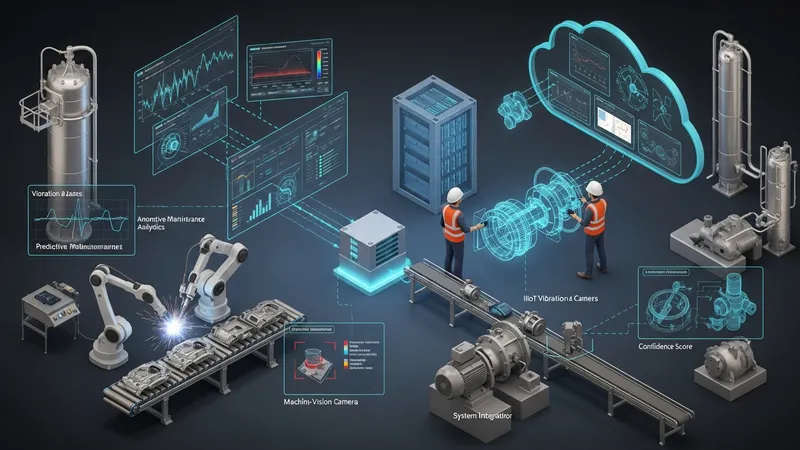
AI integration typically focuses on specific operational tasks rather than broad enterprise replacement. For example, machine vision models may be trained to detect weld defects on automotive components in factories near Monterrey, or predictive maintenance models may analyze vibration data from pumps in chemical plants in Veracruz. Model training and validation often require access to historical failure records and labeled data, which can be a constraint. Companies may partner with Mexican universities or local system integrators to develop and validate algorithms under operational conditions.
Edge computing often appears in Mexican implementations to reduce latency and bandwidth use, keeping control loops and initial analytics on-premise while synchronizing summarized metrics to cloud systems for historical analysis. This hybrid approach may be favored where internet connectivity is inconsistent or where data sovereignty considerations apply. Connectivity technologies such as industrial Ethernet, Wi‑Fi, and private LTE can be employed depending on plant layout and regulatory constraints affecting radio spectrum in Mexico.
Standardization and protocols are practical considerations: OPC UA, MQTT, and Modbus are commonly referenced when integrating legacy PLCs with modern analytics platforms. Mexican integrators and equipment vendors often provide protocol translators or retrofitting services to enable data extraction from older machines. These interoperability steps are typically part of early pilot phases so that data pipelines and format conversion challenges can be addressed before scaling across multiple sites or product lines.