
Next-Generation Industry Framework: Emerging Trends, Use Cases, And Adoption Challenges

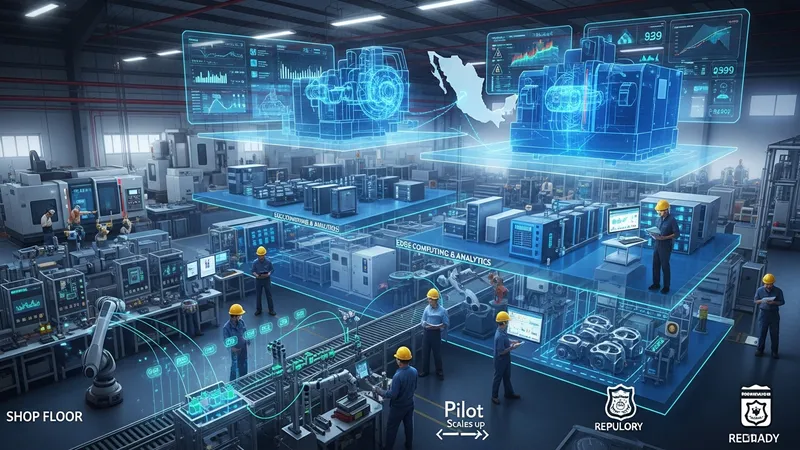
The next-generation industry framework describes a structured approach to integrating digital technologies, automation, and data-driven practices into manufacturing and industrial operations. It emphasizes interoperable systems, sensor networks, and software-driven controls that enable tasks such as real-time monitoring, predictive maintenance, and flexible production flows. The framework is typically presented as a layered architecture that connects shop-floor devices to enterprise systems and external partners while incorporating analytics and decision-support tools.
Key components often include advanced automation, artificial intelligence (AI) applied to operations, industrial Internet of Things (IIoT) sensors, and digital twins that mirror physical assets. Within a Mexico context, these components may be adapted to local supply chains, manufacturing clusters, and regulatory programs. Implementation tends to focus on incremental integration—pilot projects followed by scaled rollouts—so that technical interoperability, data governance, and workforce alignment can be assessed before broader deployment.
- Grupo Bimbo digital manufacturing initiatives — examples of automation and data analytics pilots across bakery plants in Mexico that typically explore production line monitoring and energy efficiency.
- Cemex digital and smart plant applications — instances of remote monitoring and process optimization applied at Mexican cement operations, often tied to fleet and kiln performance data.
- IMMEX program (IMMEX/maquiladora export program) — a Mexican trade and tax framework commonly referenced when manufacturers evaluate investments in automation and cross-border supply chains.
Industry 4.0 trends in Mexico often align with established industrial clusters such as automotive manufacturing in Bajío and Nuevo León, aerospace in Querétaro, and electronics in Baja California. These clusters may adopt AI for quality inspection, robotics for assembly, and IIoT for asset monitoring. Public and private research organizations in Mexico can contribute to pilots; for example, local universities and CONACYT-affiliated programs may provide collaboration or funding pathways. Technical standards and integration work often require attention to connectivity, data formats, and local supplier ecosystems.
Operational benefits cited in Mexican implementations typically include improved equipment uptime through predictive maintenance models, more consistent product quality via vision systems, and energy management informed by sensor data. These benefits may be measurable as reductions in unplanned downtime or more stable yield rates, although outcomes depend on data quality, process maturity, and the scope of automation. Cross-functional teams that include operations, IT, and maintenance staff often support effective rollout and ongoing tuning of analytic models.
Adoption barriers in Mexico commonly relate to capital expenditure, systems interoperability, and workforce readiness. Initial capital needs for sensors, edge devices, and integration work can be significant; financing or phased investment models may be considered. Interoperability between legacy equipment and modern software platforms often requires gateways or retrofitting. Workforce development is another consideration—technical and maintenance personnel may require upskilling in areas such as data interpretation, basic programming, or robotics maintenance.
Regulatory and supply-chain factors can influence the pace and shape of adoption. Mexico’s trade regimes, supply-chain dependencies across North America, and local environmental rules may affect which technologies are prioritized. Public programs and industry associations may offer guidance or co-funding for pilots, and collaboration with local suppliers can reduce integration friction. Successful projects often start with narrowly scoped pilots, use measurable performance indicators, and expand when operational value becomes clearer.
In summary, the next-generation industry framework in Mexico describes a layered approach that integrates automation, AI, and IIoT into manufacturing and logistics, with examples across prominent Mexican clusters. Implementation typically involves pilot phases, attention to interoperability, and alignment with local programs and workforce capacity. The next sections examine practical components and considerations in more detail.