
Mortgage Refinance And Home Loan Rates: Key Factors That Influence Borrowing Costs

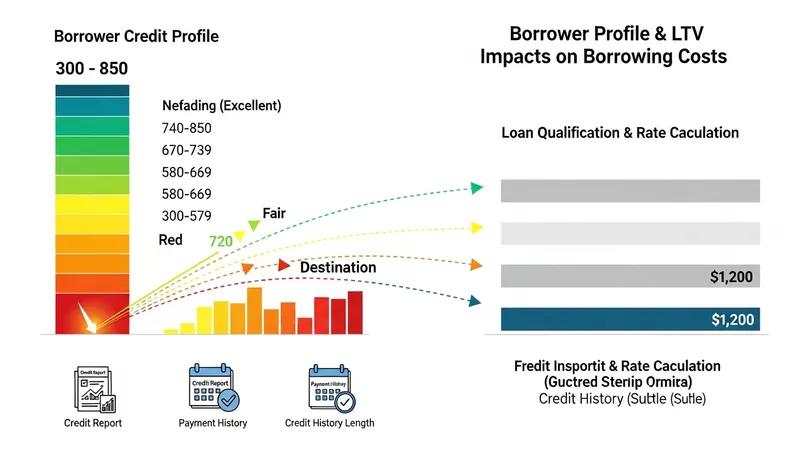
Borrower credit profile and loan-to-value impacts on borrowing costs
Borrower credit profiles, including credit scores and documented payment history, are central determinants of lender pricing. In the United States credit scores typically range from about 300 to 850 and are used by lenders to stratify risk. Higher credit scores generally correspond to more favorable pricing tiers in many lenders’ models, while lower scores can result in higher quoted interest rates or additional fee overlays. Lenders also assess debt-to-income ratios and recent credit inquiries when estimating the likelihood of timely repayment, and those assessments can influence loan pricing or eligibility.
The loan-to-value (LTV) ratio—calculated as the loan amount divided by the property’s appraised value—affects both pricing and insurance requirements. Higher LTVs typically indicate less borrower equity and can trigger private mortgage insurance (PMI) requirements for conventional loans, or specific mortgage insurance premiums for FHA loans. Lenders commonly apply pricing adjustments or restrict program options for very high LTV ratios, and investor guidelines often set maximum allowable LTVs for certain loan products.
Credit profile and LTV interact: for example, a borrower with a strong credit history and a low LTV may access more favorable pricing than a borrower with a lower score and the same LTV. Underwriting also considers recent credit events—such as bankruptcies or foreclosures—which can impose mandatory waiting periods under many program rules. Lenders disclose loan-level price adjustments and underwriting overlays in their rate sheets, and these factors collectively shape the interest rate and fees offered to individual borrowers in the U.S. market.
Practical considerations when evaluating borrowing costs include reviewing credit reports for accuracy, understanding how down payment size influences LTV and insurance needs, and recognizing that small changes in credit profile or equity can affect quoted rates. Because lender policies and investor requirements evolve, borrowers may encounter different pricing for similar profiles across lenders. Continued attention to documented credit factors and property valuation can therefore be informative when assessing potential refinance or loan origination outcomes.