
Mortgage & Real Estate Financing: Key Loan Types And How They Work

Loan Structures and Repayment Models related to Mortgage & Real Estate Financing: Key Loan Types and How They Work
Repayment frameworks typically fall into amortizing schedules, interest-only periods, or balloon structures. Amortizing schedules allocate each payment between principal and interest so the loan balance declines steadily; typical amortization terms may vary widely by market and product. Interest-only periods allow interest-only payments for a defined phase, after which full amortization begins or a balloon requires a lump-sum payment. Balloon structures may be used in short-term or bridge financing where the borrower expects an exit event. These structures influence monthly cash flow and long-term cost profiles.
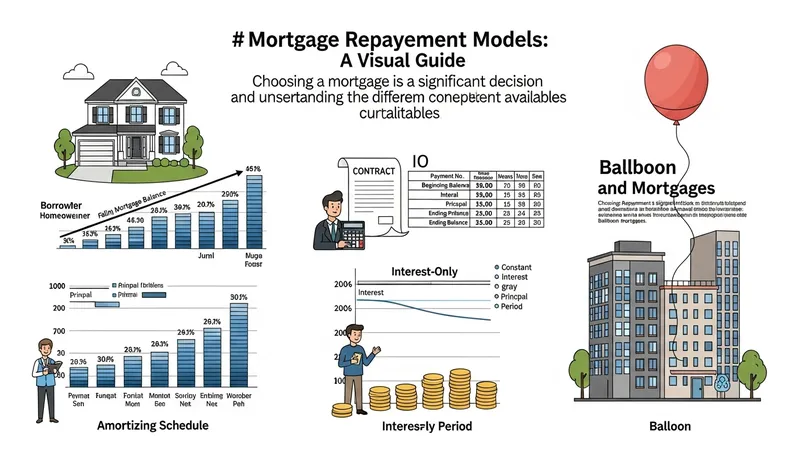
When comparing repayment models, one should consider how principal reduction interacts with interest accrual. For amortizing loans, early payments primarily service interest with principal increasing over time; this effect is more pronounced on longer amortization terms. Interest-only or delayed amortization can suppress near-term principal reduction and therefore maintain higher outstanding balances longer, which often increases total interest paid if not refinanced. Lenders address these outcomes through pricing, covenants, and sometimes mandatory amortization schedules after introductory periods.
Different loan structures may include provisions for prepayment, which can alter total cost if borrowers repay early. Some agreements permit full or partial prepayment without penalty, while others impose prepayment penalties or yield maintenance fees that compensate the lender for forgone interest. The existence and design of these clauses often reflect market norms and the lender’s duration exposure. Borrowers considering repayment flexibility may also examine the administrative procedures for principal reductions or partial repayments.
From an operational perspective, loan servicing systems must track amortization, interest recalculation for variable rates, and any scheduled principal adjustments. Accurate accounting is important for statements, escrow calculations, and collateral monitoring. Loan types that include periodic rate resets or balloon payments typically require more frequent recalculations and borrower notifications. These servicing mechanics influence the practical accessibility and transparency of different loan products for both borrowers and lenders.