
Microfluidic Protein Purification: Principles And Workflow Insights

Separation Techniques Applied in Microfluidic Protein Purification
Separation methods adapted for microfluidic protein purification often derive from classical chromatographic and electrophoretic principles but are scaled down to suit microsystems. Pressure-driven chromatography frequently relies on miniature packed or monolithic stationary phases located within microchannels to separate proteins based on chemical affinities or size exclusion. The reduced scale facilitates rapid separations with small sample volumes.
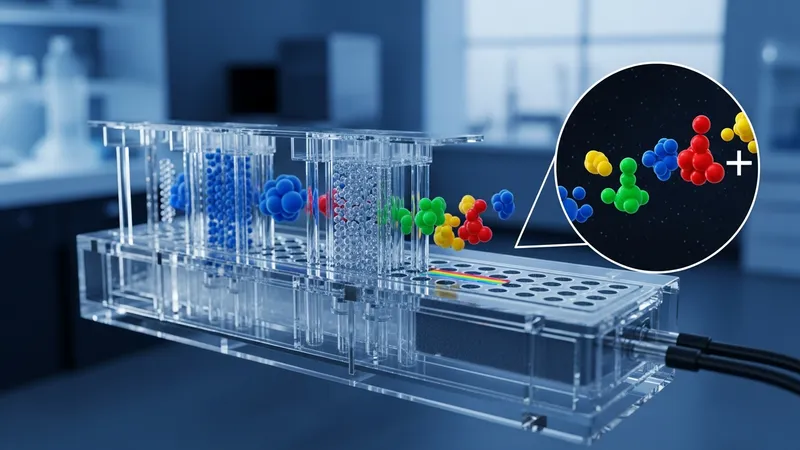
Electrophoretic techniques in microfluidics utilize electric fields established between electrodes embedded at channel ends, enabling proteins’ migration according to their charge and size. Microchip capillary electrophoresis variants can provide high resolution with rapid analysis times. Appropriate buffer systems and controlled voltages are essential to maintain protein integrity during separation procedures.
Affinity-based separations implement immobilized molecules such as antibodies, aptamers, or ligands that selectively interact with target proteins. Incorporation of these capture agents within microchannels adds specificity, which can be critical when working with complex mixtures. Magnetic beads functionalized with selective ligands are also sometimes integrated in microfluidic setups to assist in protein isolation processes.
Regions specializing in biotechnology within Mexico have reported varied applications of these separation techniques. Work by local research centers may focus on tailoring affinity ligands compatible with proteins prevalent in regional research contexts or optimizing electrophoretic conditions for specific native proteins. These advances contribute to a growing repository of methodological knowledge adapted for local analytical laboratories.