
Microfluidic Protein Purification: Principles And Workflow Insights

Design Characteristics of Microfluidic Protein Purification Devices
Microfluidic devices for protein purification incorporate specific design elements aimed at controlling fluid behavior and facilitating targeted separation. Channel geometries, such as width, depth, and length, typically influence fluid dynamics and interaction time between proteins and functional surfaces. Additionally, materials used for fabrication—commonly polymers, glass, or silicon—can affect surface properties relevant to protein adsorption and nonspecific binding within microscale channels.
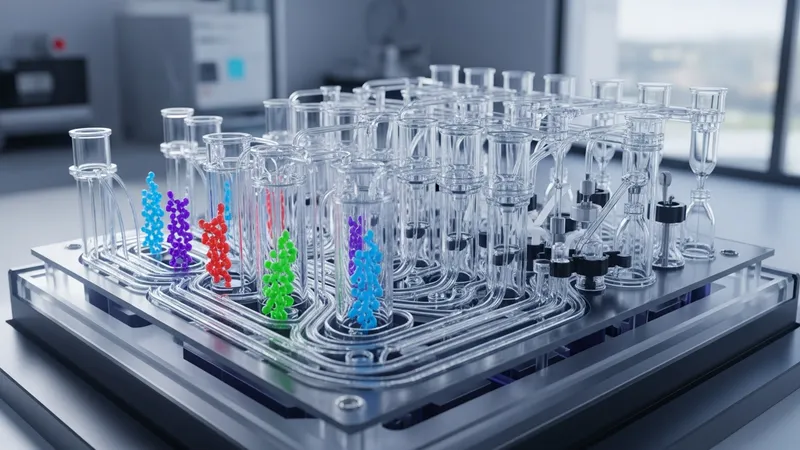
Surface functionalization inside microfluidic channels is often employed to optimize protein capture or reduce nonspecific interactions. This may involve coating channel walls with hydrophilic polymers, affinity ligands, or other chemistries tailored to the protein type. The overall device architecture can include integrated components like mixers, valves, and reservoirs that support precise sample handling, increasing workflow versatility and reducing external intervention.
In Mexico, the development and use of microfluidic purification devices are aligned with regional research activities in academic and industrial laboratories. Institutions such as Universidad Nacional Autónoma de México (UNAM) have investigated materials and microfabrication techniques relevant to device optimization. Local fabrication facilities may utilize photolithography, soft lithography, or other microfabrication approaches suitable for producing prototypes with controlled channel dimensions.
Typically, device design must balance performance characteristics such as separation resolution and throughput with practical considerations including ease of fabrication and cost. Smaller features may offer improved separation efficiency but could introduce challenges related to clogging or protein stability. Devising strategies to mitigate these factors informs ongoing development and adaptation of microfluidic protein purification devices in laboratory settings.