
Microfluidic Polymer Devices: Key Fabrication Techniques And Applications

Considerations for Design and Integration of Microfluidic Polymer Devices
Designing effective microfluidic polymer devices involves evaluating fluid dynamics, material properties, and compatibility with interfacing equipment. Channel geometries, surface characteristics, and bonding techniques must be optimized for the intended function and sample type. Computer-aided simulations are often used to predict flow profiles, analyze mixing, or prevent unwanted cross-contamination between fluid lanes. The complexity of a device’s architecture can directly influence fabrication feasibility and cost.
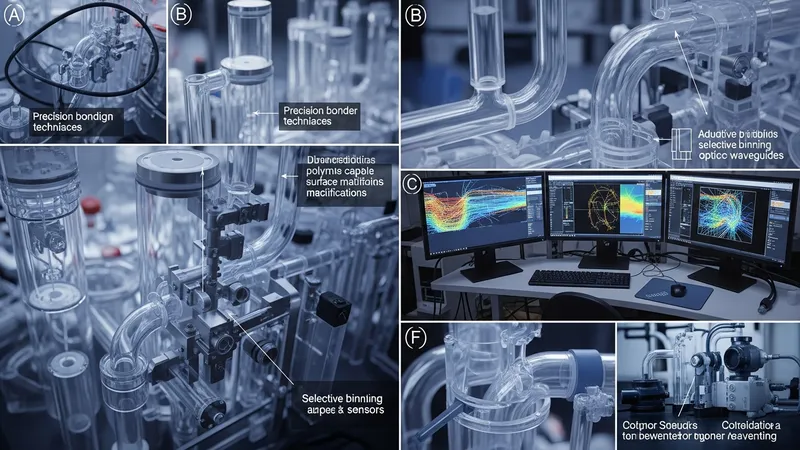
Efficient integration of microfluidic polymer devices into larger workflows typically depends on standardization of connection ports, packaging formats, and detection modalities. Close attention is paid to ensure reliable coupling with pumps, valves, sensors, or analytical instruments. Polymers amenable to surface modifications may support advanced features, such as selective binding, anti-fouling coatings, or optical waveguides, broadening their potential uses.
Quality control and testing protocols are integral for reproducibility, particularly in regulated environments or clinical contexts. Dimensional consistency, leakage resistance, and sterility are routinely assessed. Batch-to-batch variation can be minimized through automated fabrication and inspection processes. Device reusability may be considered during early design stages, factoring in cleaning, storage, and long-term stability.
Looking ahead, the development of novel polymer chemistries and hybrid manufacturing methods may further improve device robustness, enable more complex microarchitectures, and reduce costs for high-volume production. As new applications emerge, ongoing research is directed at optimizing the interface between microfluidic polymer devices and electronic, optical, or biological systems, supporting continued evolution in this versatile field.