
Marketing Automation Platforms: Key Features And Core Capabilities Explained

Feature categories in marketing automation platforms
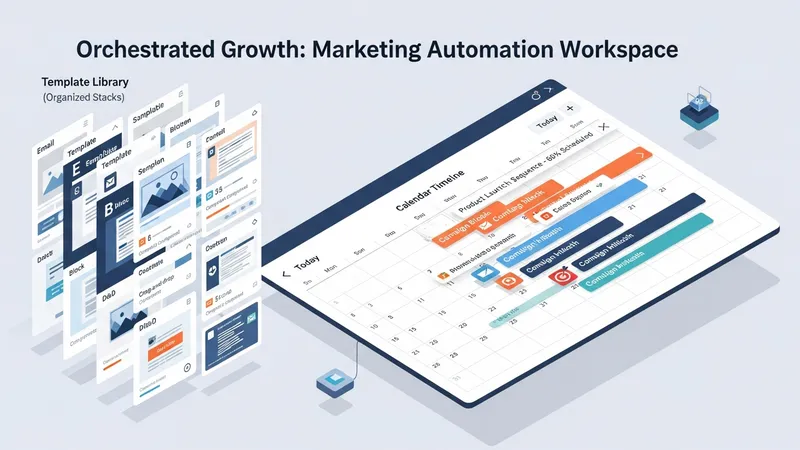
Feature sets are often grouped into recognizable categories that address distinct operational needs. Campaign management typically covers content creation, scheduling, and template libraries for consistent execution. Lead and audience management includes contact storage, segmentation engines, and lead scoring logic that can mark contacts for specific follow-up actions. Analytics and reporting modules offer tables and visualizations to monitor deliverability and engagement patterns. Understanding these categories helps teams map existing processes to available capabilities without assuming one size fits all.
Content scheduling and personalization capabilities may vary from basic merge-field substitution to sophisticated dynamic content that changes per recipient based on stored attributes or recent behavior. Personalization can be triggered by profile fields, transactional data, or event streams. When using personalization, teams commonly consider data freshness, fallback content for missing attributes, and the operational cost of maintaining personalized assets to avoid inconsistent recipient experiences.
Segmentation and audience-management tools typically let users combine multiple criteria—such as demographics, activity windows, and purchase history—to form cohorts. These cohorts can be static snapshots or dynamic segments that update automatically as contact attributes change. Dynamic segmentation often reduces manual list maintenance but may introduce computation overhead for very large datasets, which teams should account for in planning.
Workflow and automation editors differ in expressiveness and complexity. Simple systems support linear sequences with timed delays; more advanced editors enable event-triggered flows, conditional branching, and parallel paths. Teams often weigh the trade-off between expressive power and maintainability: highly complex flows may capture nuanced behavior but can be harder to audit and modify. Documentation and versioning features may assist in managing complex automation trees.