
Manufacturing Productivity: Strategies For Process Optimization

Automation Types and Role in Manufacturing Productivity
Automation covers a range of technologies in Mexico’s manufacturing sector, from basic programmable logic controllers (PLCs) to advanced industrial robotics. These systems may automate repetitive or hazardous tasks, potentially increasing both precision and safety. Automation type is generally selected according to the complexity of operations, desired capacity, and integration with other plant systems. Over recent years, sectors such as automotive, electronics, and food processing have reported adoption of flexible automation tools to address changing market demands.
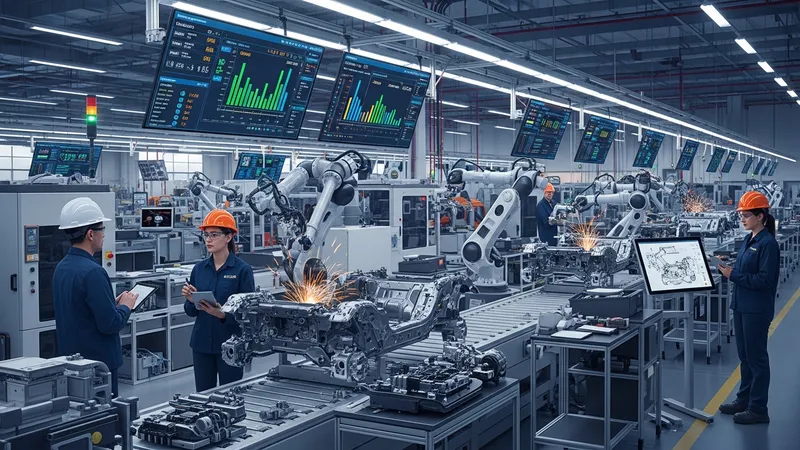
Implementation of automation solutions typically involves an initial period of configuration and workforce adaptation. Facilities may deploy sensors and data acquisition systems for monitoring production lines, allowing managers to identify trends or performance issues in real-time. This digital infrastructure often supports broader enterprise resource planning (ERP) integration, enabling companies to align production data with inventory management and supply chain processes.
In Mexico, the cost of industrial robots and related automation equipment can range widely due to factors such as production scale and required precision. For example, collaborative robots (“cobots”) used for assembly tasks often start at around $200,000 MXN, with full-featured welding or painting robots reaching $800,000 MXN or higher. Funding assistance from government programs or industry partnerships may be available for qualifying plants aiming to modernize production capacity.
The productivity impact of automation is typically measured through reductions in cycle times, improvements in product quality, and more consistent throughput. Many Mexican manufacturers may experience increased equipment uptime and resource utilization following integration, though realizing full benefits can depend on factors such as skilled technical maintenance and ongoing staff training.