
Lead Prospecting Platforms: Key Features And Core Capabilities Explained

Integration with CRM and marketing systems for lead prospecting platforms
Integration capability is a central consideration because prospecting outputs often feed into CRM workflows used by U.S. sales teams. Common integrations include native connectors to CRMs, CSV import/export, and API endpoints for programmatic synchronization. Platforms that offer bi-directional sync may reflect status changes such as “contacted” or “qualified” back into the prospecting tool, helping to prevent duplicate outreach. Integration maturity can affect time-to-value, with more seamless connectors typically reducing the need for manual list transfers.
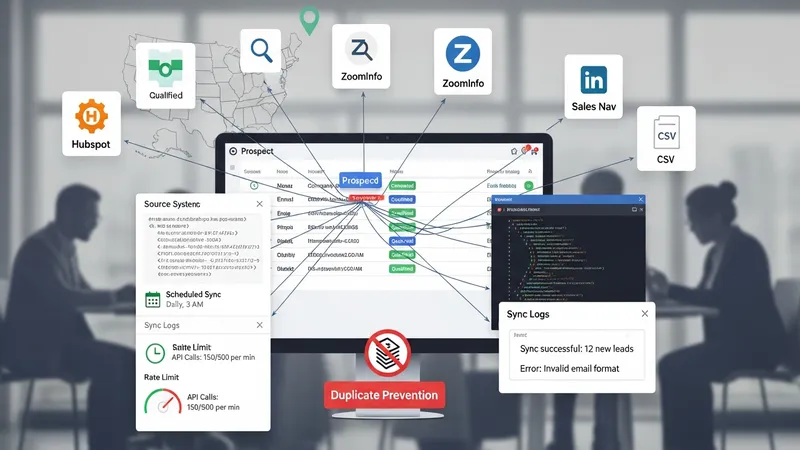
Compatibility with popular U.S. CRMs and marketing automation platforms is frequently verified during vendor evaluation. For instance, HubSpot CRM may be used both as a prospecting endpoint and as a follow-up platform; ZoomInfo and LinkedIn Sales Navigator have documented integration paths with a range of U.S. CRM vendors. Buyers often examine whether integrations support field mapping for custom attributes, scheduled syncs, and rate limits on API calls to understand operational constraints.
Middleware tools and iPaaS services are sometimes used to bridge feature gaps between prospecting platforms and enterprise systems. These intermediaries can handle transformation rules, de-duplication, and staged validation before records reach the main CRM. Such an approach may be helpful for organizations that need to enforce specific data standards or routing logic for U.S.-based territories. Teams often test sample syncs to validate mappings and timing before full-scale adoption.
Operational considerations include auditability and rollback capabilities when syncing large volumes of prospect data. Change logs and synchronization reports can help trace when a record was created or updated, which is useful for compliance and troubleshooting. Organizations in the United States often define synchronization cadences and error-handling procedures to minimize the risk of propagating incorrect records into sales pipelines.