
Lead Prospecting Platforms: Key Features And Core Capabilities Explained

Feature coverage and data enrichment in lead prospecting platforms
Feature coverage typically spans search capabilities, enrichment layers, and record management. Search tools often include filters for company size, industry classification, geographic location within the United States, and seniority level; these filters may be combined using logical operators to refine candidate lists. Enrichment processes attempt to append missing attributes to records, such as phone numbers or direct email formats, and often include a provenance indicator showing the originating source. Users typically weigh the breadth of attributes against update frequency, since larger coverage may come with more stale entries in some segments.
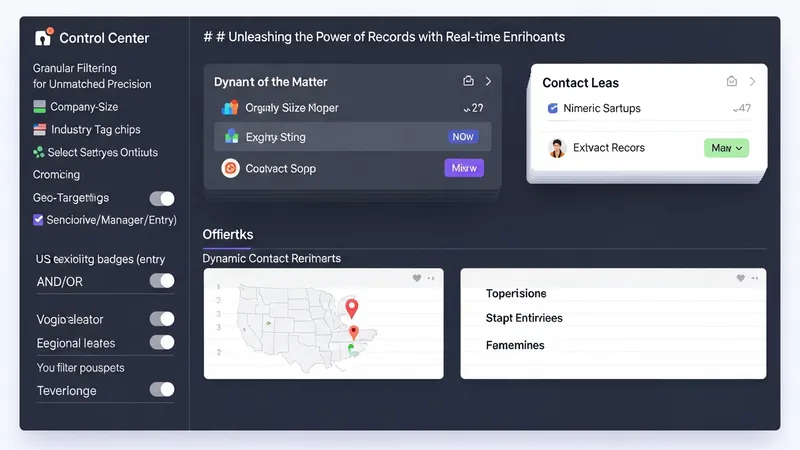
Providers differ in how they refresh and source data. Some rely heavily on professional-network signals and user-contributed corrections, while others ingest commercial datasets and public filings to populate firmographics. For example, LinkedIn Sales Navigator primarily leverages platform profile activity, ZoomInfo aggregates corporate and commercial sources, and HubSpot CRM focuses on contact capture and integration. Teams often compare how each approach affects match rates for target personas relevant to U.S. market segments.
Accuracy and deduplication features are commonly offered to reduce redundant outreach. Systems may provide matching rules that merge near-duplicate records or surface the most recently updated instance. Automated deduplication can be useful but may require manual review to prevent incorrect merges, especially when contacts have similar names across distinct subsidiaries. Organizations in the United States sometimes schedule regular deduplication audits and sample-based verification to maintain list hygiene.
When evaluating enrichment outputs, teams tend to consider confidence indicators and source diversity. Confidence scores can help prioritize records for manual validation. Source diversity—combining social profiles, corporate websites, and third-party directories—often improves coverage for certain industries but may complicate provenance tracking. Practical usage patterns often involve using enrichment to populate fields for segmentation while retaining a verification step before higher-value outreach.