
Industrial Machines: Key Roles In Modern Manufacturing Processes

Automation and Control in Industrial Manufacturing Machines
Many modern industrial machines incorporate advanced automation and control systems to enhance reliability and process monitoring. Programmable logic controllers (PLCs) are central to this development, providing real-time decision-making and coordination among equipment. The use of sensors and feedback mechanisms can assist in maintaining quality and identifying process variations before they impact output.
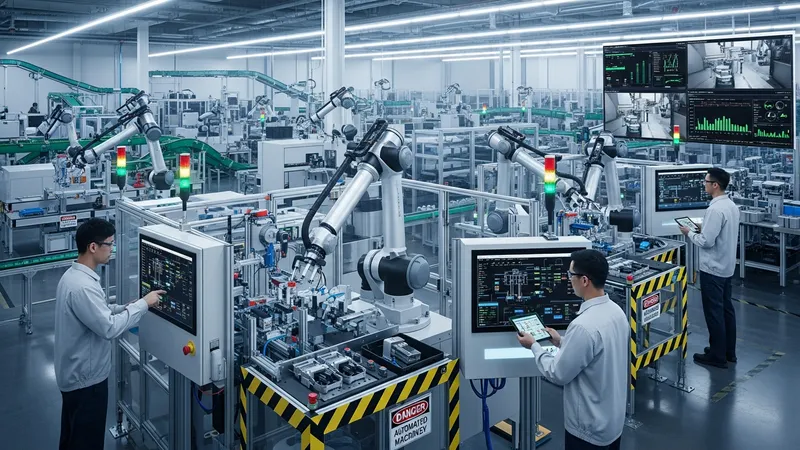
In robotic installations, motion controllers define precise pathways, speeds, and manipulation points for mechanical arms during assembly. Safety interlocks and vision systems may be integrated to detect obstacles or ensure alignment with specified quality standards. As a result, operators may experience increased confidence in process repeatability, though ongoing supervision and calibration remain necessary.
Automation within conveyor systems may include variable speed controls and automated sorting stations. These features enable dynamic adjustment of transport rates based on fluctuations in production demand. Monitoring tools can be used to generate real-time statistics, allowing operational adjustments such as prioritizing high-volume products or rerouting for inspection as needed.
The adoption of computer-controlled machining offers manufacturers the ability to standardize output and adapt to complex part geometries. Digital interfaces allow programming of intricate shapes and dimensions with high consistency. While initial setup may require careful tuning of system parameters, the long-term benefits often include repeatable performance in component manufacturing.