
Industrial Automation Systems: Key Components And Functions In Manufacturing

Control software, logic patterns, and supervisory applications in manufacturing automation
Control software implements the logic that converts sensor inputs into actuator outputs. At the machine level, programmable logic controllers (PLCs) often run cyclic programs that execute ladder diagrams, function block diagrams, or structured text. Supervisory systems aggregate data from multiple controllers, provide visualization, and implement high-level sequencing or recipe management. Manufacturing execution systems (MES) may sit above supervisory layers to coordinate production scheduling and traceability. The software stack typically separates fast deterministic control from historical data management to ensure responsiveness while enabling analysis and reporting.
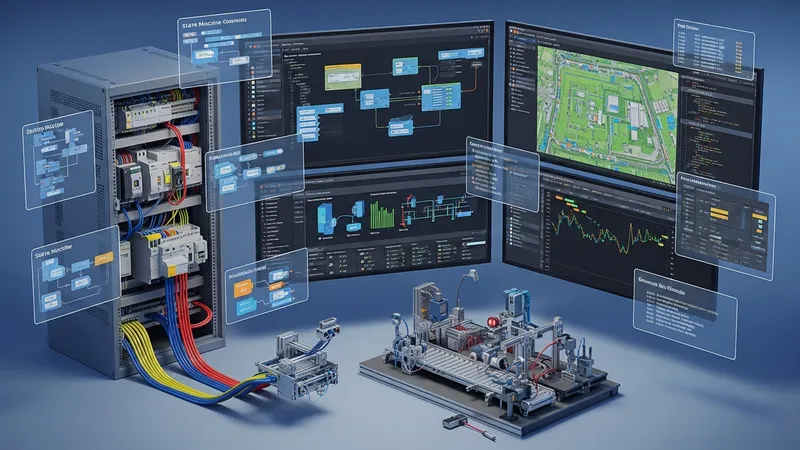
Logic development practices typically include version control, simulation, and staged commissioning to reduce the risk of errors. Modularizing code by function (safety interlocks, motion control, I/O handling) may improve readability and reduce test scope. Control logic often includes state machines or interlocks that define safe machine modes; documenting these behaviors helps cross-functional teams understand how automated actions proceed. Testing in a lab or virtual environment can uncover integration issues before deployment and may reduce startup delays.
Supervisory applications provide alarm management, trending, and user interfaces for operators. These platforms may also integrate basic data processing for loss analysis or quality checks. When supervisory systems connect to enterprise software, concerns about data formats, latency, and semantic consistency commonly arise. Mapping data points to meaningful tags and retaining contextual metadata typically improves downstream usability, especially for quality and maintenance analytics.
Software lifecycle and cybersecurity considerations often affect long-term sustainability. Regular updates, secure configuration practices, and network segmentation may reduce exposure to unauthorized access or disruptive events. Access control, logging, and change-tracking practices provide traceability for configuration changes. These are typically treated as ongoing operational disciplines rather than one-time tasks, and they often involve coordination between engineering and IT functions.