
Home Equity Line Of Credit: How HELOCs Work And Key Features To Understand

Draw period mechanics and repayment options for home-secured revolving credit
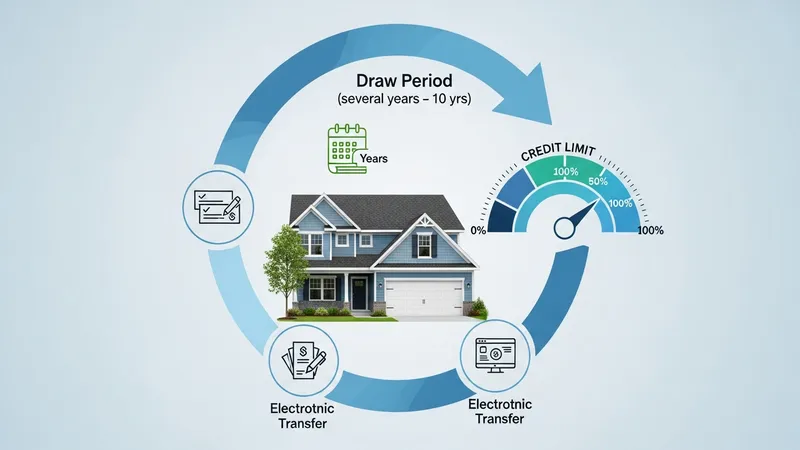
Draw periods define when borrowers can access the approved revolving amount. Typical draw periods may range from several years to a decade, depending on the product. During this phase, borrowers generally may take multiple advances up to the credit limit, repay and redraw amounts, and choose among payment options that the lender permits. Availability of funds through checks, electronic transfers, or cards can vary. The draw period’s duration influences overall repayment timing and the eventual transition to scheduled repayments.
Repayment options after the draw period commonly include conversion to scheduled principal-and-interest amortization, or allowing periodic payments that include both principal and interest during the draw period. Interest-only payments during the draw period may keep near-term payments lower but postpone principal reduction, potentially resulting in higher later payments. Some lenders allow partial conversions—selecting specific balances to convert to fixed installments—so that borrowers may manage a portion of outstanding balances with more predictable payments.
Amortization schedules post-draw can create payment changes that borrowers may encounter as “payment shock.” The length of the repayment phase, which is often predetermined, affects the size of those payments: longer amortization periods typically reduce required monthly payments but extend the repayment horizon. Certain products also provide payment calculators or sample amortization tables to illustrate how balances and payment amounts could evolve under various interest-rate scenarios. These tools may help borrowers visualize timing and affordability impacts without acting as prescriptive advice.
Considerations to manage transitions include assessing the likely range of future payments and whether the borrower’s expected income or finances may accommodate increases. Some borrowers plan to reduce outstanding balances during the draw period to lessen later payment increases, while others use conversion features to lock portions into fixed installments. These are planning considerations rather than guarantees; they may help frame decisions about the most suitable structure given a household’s financial planning preferences.