
Germany’s Sustainable Power Strategy: Grid Modernization And Infrastructure Planning

Storage, flexibility, and sector coupling considerations within Germany
Storage technologies play multiple roles in Germany’s system, from short-duration batteries that provide fast frequency response to longer-duration options such as pumped hydro that can shift energy seasonally. Battery installations are increasingly used to provide local congestion relief and market participation, while larger storage assets may be deployed by market participants or network operators as part of grid-support strategies. Regulatory treatment in Germany determines whether storage participates as generation, consumption, or a distinct asset class for grid and market purposes.
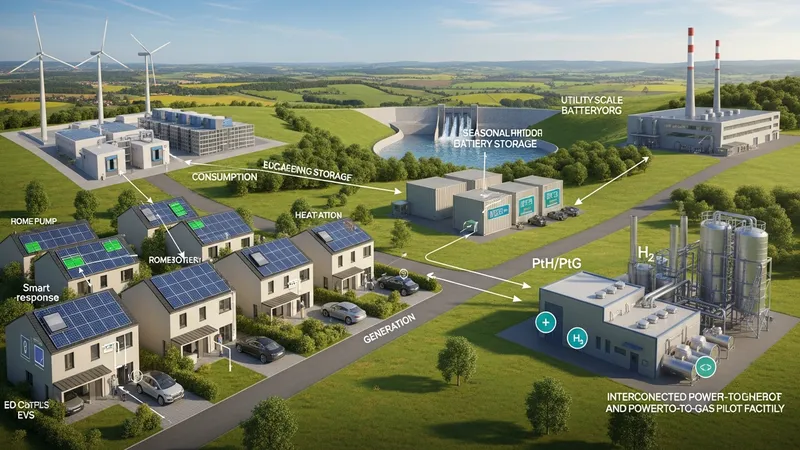
Demand-side flexibility and sector coupling—linking electricity with heating, transport, and industrial heat—are often discussed as means to absorb variable supply and reduce peak transmission needs. Examples in Germany include heat pumps with controlled operation, electric vehicle charging that responds to grid signals, and power-to-heat or power-to-gas pilots. Integration of these loads may reduce the need for some grid reinforcements if managed strategically, though coordination mechanisms and market incentives shape how widely such measures are adopted.
Aggregators and virtual power plant concepts can bring smaller assets together to offer meaningful system services under German market rules. Aggregation models may be subject to specific registration, bidding, and settlement requirements defined by market operators and regulators. Pilot programmes and test frameworks in Germany often aim to clarify the technical and commercial interfaces for aggregated resources to participate in balancing and redispatch markets.
Cost considerations for storage and flexibility projects are typically expressed in project-specific terms and may include capital costs, operational expenditures, and potential revenue streams from market participation. Public programmes or financing instruments in Germany can influence project economics, and technology-learning effects may reduce capital costs over time. Decision-makers often weigh these economic factors alongside system benefits such as reduced curtailment and enhanced local reliability when prioritising storage deployments.