
Germany’s Sustainable Power Strategy: Grid Modernization And Infrastructure Planning

Transmission, distribution, and spatial planning for Germany’s networks
Transmission system operators in Germany — including TenneT, Amprion, 50Hertz, and TransnetBW — produce network development plans that identify necessary high-voltage reinforcements. These plans typically review projected generation additions and demand patterns and may propose new corridors or converter stations. Regional distribution companies then coordinate local reinforcements, often aligning with the broader transmission plans to ensure that capacity is available for connecting new renewable plants. German planning processes may include public consultation phases and environmental assessments under national statutes.
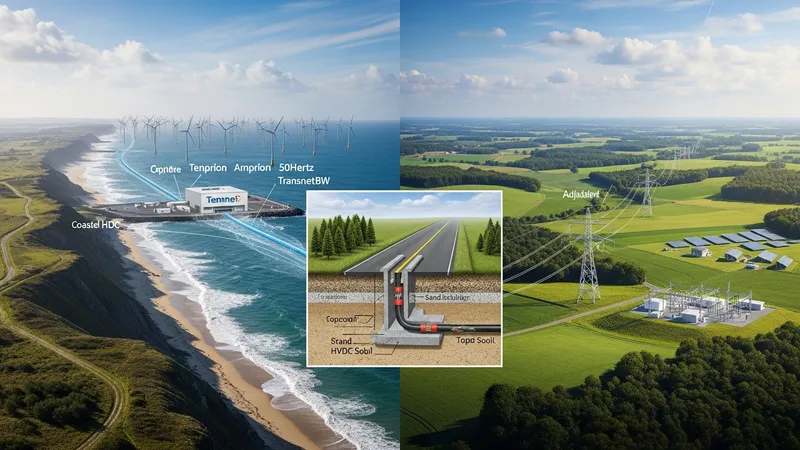
Spatial planning considerations often lead to differentiated approaches: coastal regions may prioritise maritime grid infrastructure and offshore connections, while inland regions focus on onshore reinforcements or decentralised solutions. Routing decisions take into account landscape protection, population density, and existing infrastructure. In some cases, underground cabling or reconductoring is considered to reduce visual or land-use impacts, and cost implications of such choices are typically discussed during regulatory review processes in Germany.
Distribution-level measures may emphasise non-wire alternatives where appropriate, such as targeted active network management, local storage, or flexible consumption programmes that delay or avoid expensive line upgrades. German DSOs sometimes pilot these approaches under regulatory sandboxes to test technical and market interactions. The success of such measures often depends on predictable procedural rules for network access and compensation models that reflect the avoided investment value.
Coordination between federal, state (Länder), and municipal authorities is commonly necessary to streamline permitting and siting for grid projects. Timeframes for approvals may vary by region, and stakeholder engagement processes are used to address local concerns. Planning authorities and TSOs often publish timelines and project maps so affected communities and market participants can follow proposed measures and prepare for potential impacts on local infrastructure and land use.