
Foundation Repair: Insights Into Early Warning Signs

Understanding changes to a building’s foundation is an important aspect of maintaining structural stability. Signs of possible foundation concerns often present themselves gradually and may be observed both inside and outside a building. Early identification of these indicators can help minimize the extent of future interventions, as addressing issues at an initial stage is typically less complex than managing advanced structural shifts. Both property owners and maintenance professionals commonly monitor symptoms such as alterations in flooring, wall integrity, and water infiltration to assess potential concerns.
Foundation movement can occur for several reasons, including environmental factors, building age, or fluctuations in moisture levels. These changes may affect the way doors or windows function, or cause visible shifts in floors and walls. Since each property’s construction style and environmental conditions are unique, the manifestation of warning signs can vary widely. Professional evaluation may be required to determine the exact cause and appropriate response.
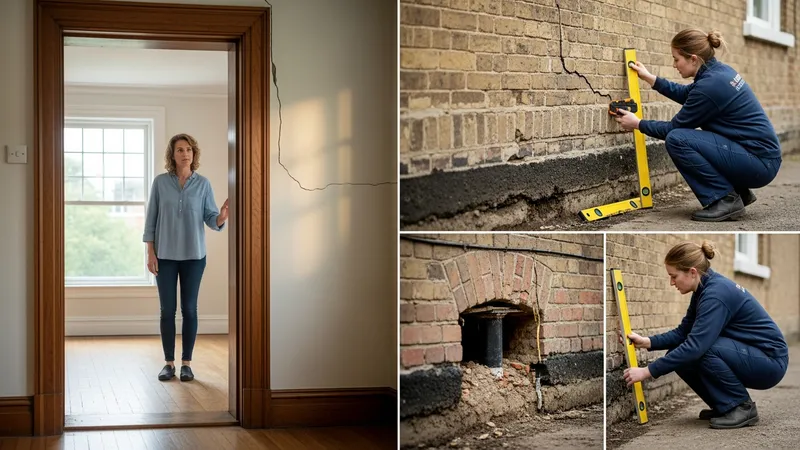
- Wall Cracks: Vertical, diagonal, or stair-step cracks may develop in interior or exterior walls. More on wall crack patterns (Nevada Division of Heritage)
- Uneven or Sloping Floors: Shifts in the foundation may lead to visible sloping or separation in flooring surfaces. More on floor unevenness (FEMA)
- Sticking Doors and Windows: When frames warp or become misaligned, doors and windows may stick or not fully close. How this relates to foundation movement (InterNACHI)
- Moisture Intrusion and Water Accumulation: Dampness or pooling water near the foundation can signal drainage concerns that may contribute to foundation issues. Moisture intrusion details (EPA)
- Bowing or Leaning Basement Walls: Basement walls that bow inward or lean may indicate excessive soil pressure or drainage complications. Basement wall movement overview (Structural Engineers Association)
Wall cracks, particularly those that change in size over time, may signal differential settling of a building foundation. Not all cracks are directly related to major structure shifts, as some may occur from paint shrinkage or minor plaster movement. Consistent observation for patterns and progression is commonly recommended to distinguish between cosmetic and structural causes.
Uneven or sloping floors may point to possible foundation settlement or heaving. This is sometimes observed as gaps between floorboards, a tilting sensation when walking, or the shifting of objects on surfaces. Routine inspection with a level tool or measuring device can help track subtle changes that develop gradually.
Sticking doors and windows often result from frame misalignment. While temperature and humidity fluctuations can lead to slight movements in wood, persistent stiffness or visible gaps around frames may warrant inspection. Such symptoms can be early indications of changes occurring in the supporting foundation structure.
Water accumulation close to a foundation is a commonly recognized factor that may contribute to soil expansion or erosion. Blocking or redirecting surface water away from buildings is considered an effective means of supporting ongoing stability, though persistent dampness may indicate an underlying issue that should be evaluated further.
In summary, recognizing these early warning signs can provide valuable information on the condition of a building’s foundation. Monitoring visible symptoms and tracking changes over time helps inform decisions about further assessments. The next sections examine practical components and considerations in more detail.