
EV Cars: Insights Into Safety Standards And Requirements

Global Safety Categories for EV Cars: Insights into Safety Standards and Requirements
Safety categories for electric vehicles often address a range of potential hazards and operational scenarios. Among the most significant are crashworthiness, which pertains to the vehicle’s structural response during collisions; battery safety, focusing on management of thermal and electrical risks; and occupant protection, which examines seat restraints, airbags, and interior materials. Each category typically interacts with one or more of the regulations or protocols described on the first page.
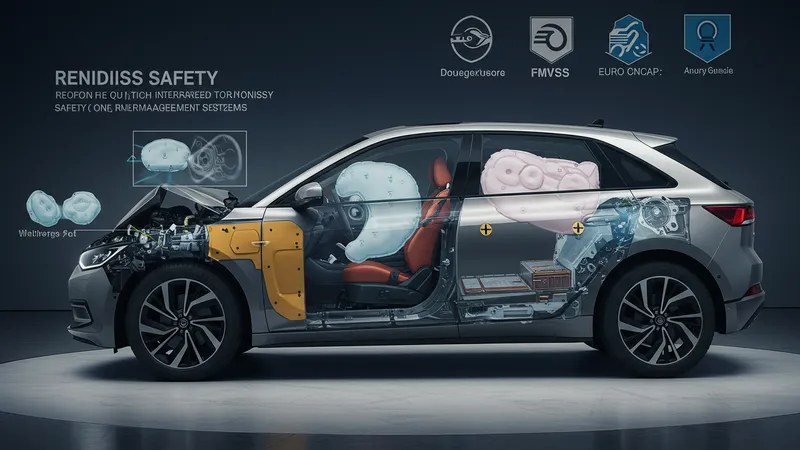
Crashworthiness involves not only the durability of the vehicle’s frame but also the securement of high-voltage batteries within the vehicle’s structure. Methods for testing crashworthiness in EVs may include frontal, side, and pole impact evaluations, as outlined by agencies like FMVSS and Euro NCAP. Results may influence vehicle design choices, such as reinforcements near battery compartments or protective shielding around critical components.
Battery safety is a distinct category for EVs, encompassing rules for preventing short circuits, containing thermal runaway events, and ensuring proper isolation of live electrical parts. UNECE Regulation No. 100 provides a baseline for these aspects, but manufacturers often perform additional tests to address region-specific environmental or usage patterns. These tests may simulate overcharging, puncture, water immersion, or extreme temperatures to verify battery stability.
Occupant protection in EVs typically incorporates enhancements found in traditional vehicles, such as crumple zones and airbags, while adding provisions for unique risks associated with high-voltage systems. Emergency shut-down mechanisms and labeling of high-voltage cables are often required to protect both occupants and first responders. As the specific safety features are continually updated, vehicle models can see varying configurations based on the year of manufacture and targeted sales region.