
Digital Wealth Management Platforms: How Online Tools Support Portfolio Management

Feature categories and data integration for portfolio management
Feature sets usually group into aggregation, analytics, execution controls, and reporting. Aggregation connects to U.S. custodians (for example, major brokerages and banks) and often uses direct APIs or third-party aggregators to import holdings and transaction history. Analytics modules then calculate allocation, recent performance versus benchmarks, and risk indicators. Execution controls refer to the platform’s ability to place trades, rebalance, or route orders through a connected custodian. Reporting covers consolidated statements, realized gains and losses, and files formatted to common U.S. tax workflows.
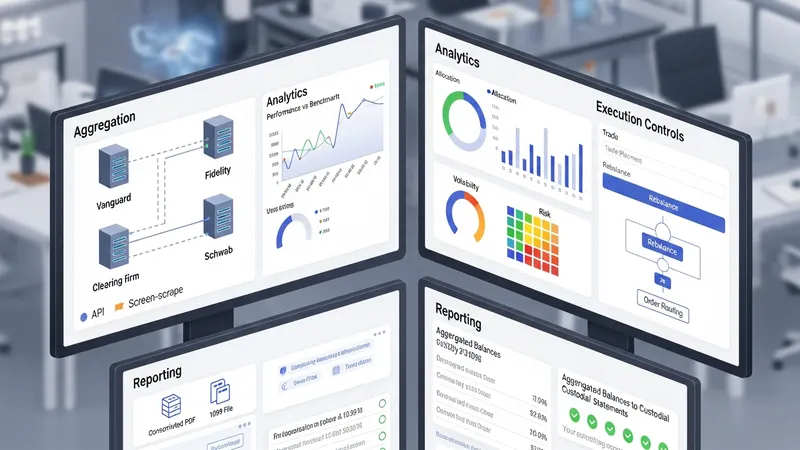
Integration approaches affect data timeliness and fidelity: direct custodian APIs typically provide more frequent, reliable updates than screen-scraped connections. In the United States, many platforms advertise integration with large custodians such as Vanguard, Fidelity, Schwab, and major clearing firms; however, support for smaller or legacy custodians can vary. Users and administrators may review connection logs and reconciliation tools to confirm that aggregated balances match custodial statements.
From an operational standpoint, platforms may allow users to set allocation targets, rebalancing tolerance bands, and trading schedules. These controls are often configurable but behave according to pre-set rules; for instance, a platform may execute rebalancing only when drift exceeds a percentage threshold or at scheduled intervals. In U.S. accounts, those trades are executed through the linked brokerage account and are recorded for regulatory and tax reporting consistent with IRS and FINRA recordkeeping norms.
Considerations for evaluating data integration include refresh cadence, account coverage, and how the platform represents cost basis for tax events. It is often helpful to verify how a platform sources price data and whether it supports lot-level tracking used for U.S. tax reporting. These practical details can influence the usefulness of dashboards and the accuracy of exported reports for year-end reporting or financial planning conversations.