
Digital Twin Transformation In Healthcare: Understanding Provider Roles And Capabilities

Operational use cases and capacity building for providers in the United States
Providers may apply digital twins to equipment lifecycle and maintenance planning. For example, imaging departments can combine device telemetry with maintenance logs to simulate failure probabilities and schedule preventive actions; such initiatives often report potential improvements in utilization and downtime in pilot studies at U.S. hospitals. Biomedical engineering teams typically collaborate with vendors to validate telemetry interpretation and to ensure that simulated scenarios reflect realistic device behavior and manufacturer guidance.
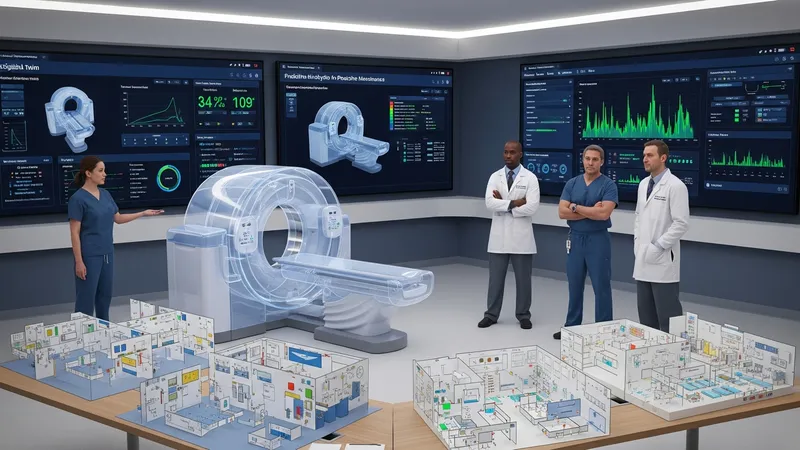
Simulation of clinical workflows and resource allocation is another common application. Emergency departments and perioperative services may use discrete-event models to test alternative staffing, room assignments, or supply chain arrangements. In the U.S., hospitals that pilot such simulations often pair operational analysts with clinical leads to interpret results and translate findings into process experiments; these pilots usually emphasize measurement and iterative refinement rather than immediate system-wide changes.
Patient-specific modeling for surgical planning or device sizing is emerging in specialized centers. These projects often require high-resolution imaging, multidisciplinary validation, and careful clinical governance. In academic settings, teams may publish feasibility work demonstrating how a virtual model could inform planning; such publications typically note limitations and call for prospective studies before broad clinical adoption. Providers considering similar projects usually plan staged validation and clinician training as part of capability building.
Capability development commonly combines technical hiring, partnerships, and internal training. U.S. providers often form cross-functional teams that include data engineers, clinical informaticists, and simulation specialists. Considerations include establishing reproducible pipelines, documenting model assumptions, and scheduling regular model performance reviews. These practices are typically presented as prudent organizational measures to support the reliable use of virtual models within clinical and operational contexts.