
Digital Twin Transformation In Healthcare: Understanding Provider Roles And Capabilities

Regulatory, privacy, and governance considerations in United States settings
Privacy regulation and protected health information frameworks guide how data is used to build and run virtual models. In the United States, HIPAA sets baseline requirements for handling individually identifiable health data, and business associate agreements are commonly used when vendors process such data. Providers often seek to de-identify datasets for research or cross-institutional collaboration, applying expert determination or safe-harbor methods while documenting processes and residual re-identification risk as part of governance records.
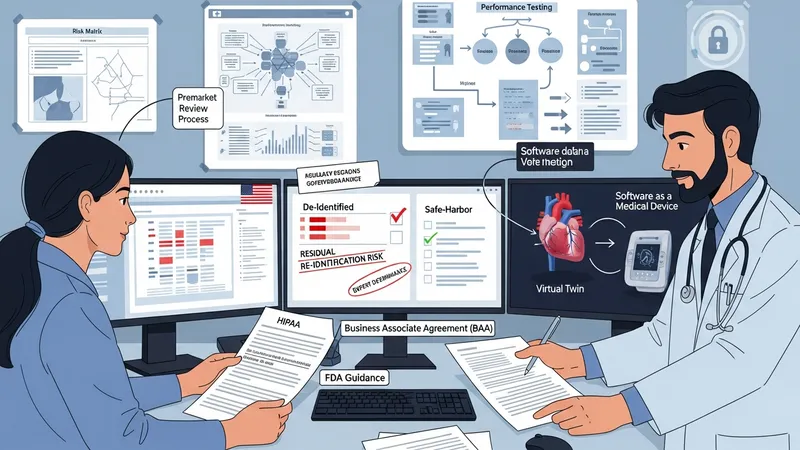
Regulatory oversight can apply when digital twins intersect with device functionality or clinical decision-making. The U.S. Food and Drug Administration (FDA) provides resources addressing digital health and software as a medical device; teams developing models that influence treatment or device operation typically review FDA guidance and engage regulatory affairs to determine whether premarket review or additional validation is needed. Documentation of intended use, risk analysis, and performance testing is typically part of that evaluation.
Institutional review boards and research governance committees may be involved when models use patient data for research or testing. Many U.S. academic centers require IRB review or determination of exemption for projects that analyze patient data or involve model-derived synthetic cohorts. Providers often establish data access committees to review research proposals, ensuring data minimization and adherence to consent terms. Transparent recordkeeping and periodic audits are typical governance activities to maintain compliance and public trust.
Data governance frameworks usually specify stewardship roles, retention policies, and quality metrics. Providers may adopt cataloging tools that record lineage, versioning, and authorized uses for datasets and models. These practices can support reproducibility and accountability, and they are commonly framed as considerations for long-term maintainability and regulatory readiness rather than guaranteed risk elimination.