
Credit Card Processing: How Payment Gateways And Merchant Accounts Work For Businesses

Cost Factors, Pricing Components, and Accounting Considerations for U.S. Businesses
Costs in card processing are composed of several elements: interchange fees set by card networks and issuing banks, acquirer or processor markups, gateway subscription fees, per-transaction fees, and hardware expenses for terminals and point-of-sale systems. Interchange generally represents the largest single component and varies by card brand, card type (credit, debit, rewards), and transaction method (card-present, card-not-present). Processor markups and gateway fees are additional and are typically described in contractual statements provided by the acquiring party.
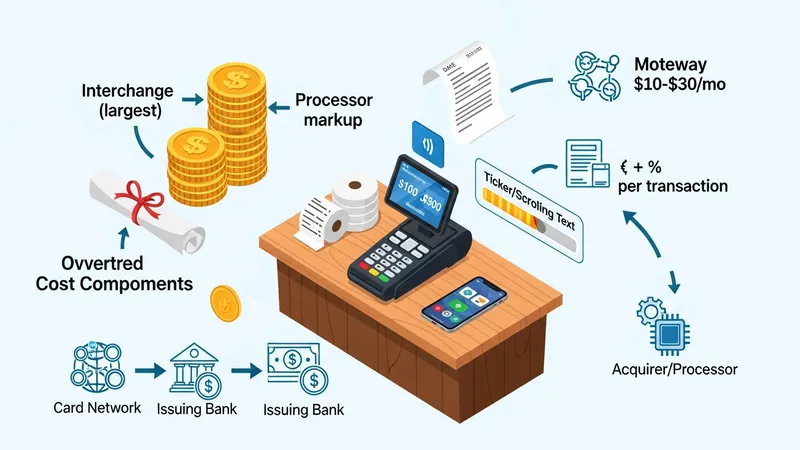
Typical U.S. pricing patterns can include monthly gateway fees in the range of about $10 to $30 for small merchants and per-transaction access or processing fees that may be a few cents to several tenths of a dollar plus a percentage of the transaction. Hardware for EMV-capable terminals can range roughly from $100 to $800 depending on features and whether the device supports contactless or integrated POS functions. These figures are approximate and may vary by provider and merchant profile.
Accounting for card processing requires reconciling gateway and processor reports with bank deposits. Merchants often map batches of settled transactions to daily or multi-day deposits, deducting interchange and processor fees shown as separate line items. Chargebacks and adjustments should be tracked as liabilities until resolved, and practices such as bookkeeping categorizations for fees, refunds, and chargebacks can aid in cash-flow forecasting and profit analysis for U.S. operations.
When evaluating cost structures, merchants in the United States commonly consider transaction volume, average ticket size, and the mix of card-present versus card-not-present sales. Higher volumes may support negotiation of pricing tiers or access to different contractual models with acquirers, while merchants with recurring billing needs may prioritize gateways that support tokenization and detailed reporting to automate reconciliation. These are considerations rather than guarantees, and outcomes typically vary by business profile and contractual terms.