
Container Housing: Future Trends In Modular Living And Urban Development

Types and configurations of container housing in modular urban development
Container housing configurations in U.S. practice typically vary by unit count and assembly method. Single-container microhomes often use one 20-foot or 40-foot container arranged for compact living, while multi-container assemblies join two or more units to expand floor area and create multiple rooms. Stackable systems may add vertical density but usually require additional structural engineering. Configurations also differ by use: standalone dwellings, accessory dwelling units (ADUs) on existing lots, or clustered modules in infill developments. Choice of configuration often responds to lot size, zoning, and access constraints in U.S. cities.
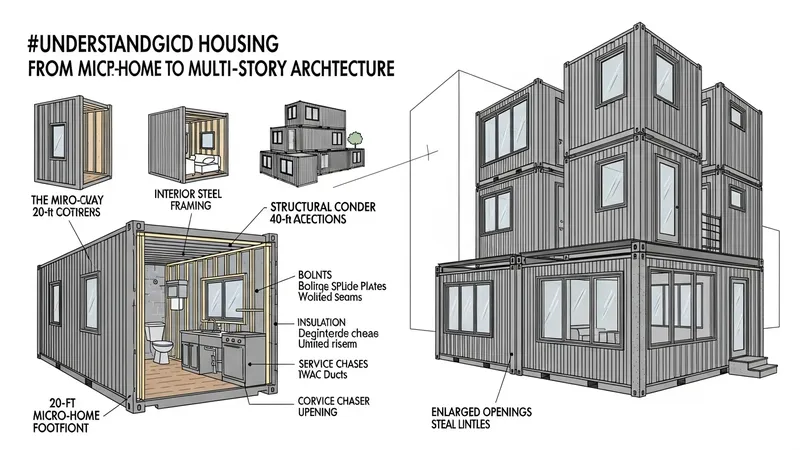
Each configuration commonly requires different structural and envelope strategies. Single-container units may rely on interior framing for insulation and services, whereas multi-container assemblies often need welded or bolted connections and additional support at cut openings. Stack stacks may require moment frames or additional corner-post reinforcement. Designers frequently document these modifications to satisfy local building departments and, when applicable, referenced ICC code sections for structural adequacy.
Typical sizing and layout practices in the United States reflect container dimensions: a 40-foot container may yield a basic long-plan studio, while two side-by-side containers can create a wider living space. Interior planning often emphasizes efficient circulation and multi-functional zones to make the most of limited floor area. Where ADUs are proposed under state ADU reforms or local ordinances, configuration choices must align with setback, height, and parking rules that differ across municipalities.
Practical considerations for configuration selection often include transport and site-access limitations. Moving a 40-foot container on U.S. roads may require permitting and escort services depending on local rules; on-site handling can involve local crane operators or heavy-equipment contractors. These logistics commonly affect the sequencing and cost of a project and are notable items in feasibility assessments at the municipal or developer level.